The Assessment & Evaluation Research Centre (AERC) is dedicated to the advancement of assessment, measurement, and evaluation in various fields, with a primary focus on education. We conduct research and teaching that draws on the latest theoretical, methodological and technological advancements in these disciplines to inform and improve assessment and evaluation practices locally, nationally and internationally.
News
Upcoming events
Past events

Directors

Staff

Mr Vincent Liang

Honorary Fellows

Prof Siv M. Gamlem
Prof Barry McGaw

Dr Nathan Zoanetti
The Assessment and Evaluation Research Centre is involved in a wide range of research activities focused on promoting educational measurement and assessment.
Latest research
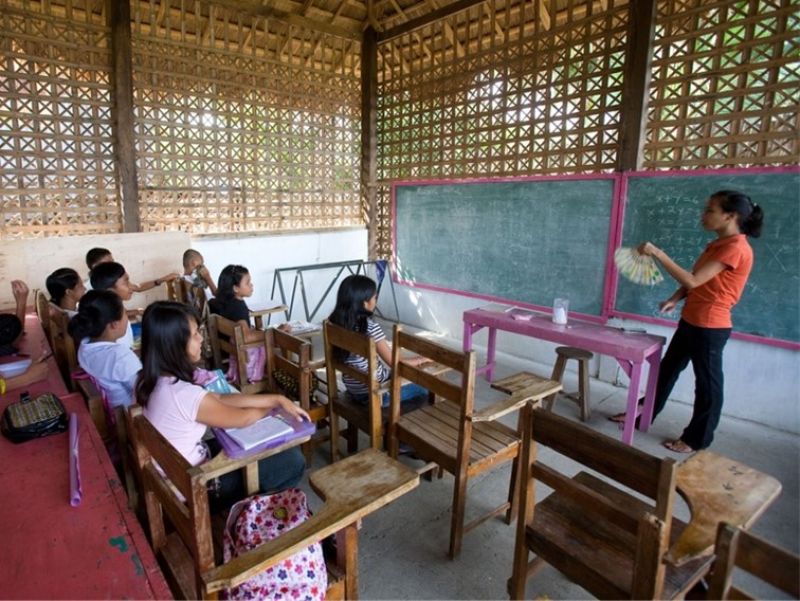
New research launch: Understanding Relationships Between Structural and Process Quality in Secondary Education in the Philippines
Faculty of Education researchers are investigating how structural and classroom-level factors shape teaching quality and student outcomes including achievement, engagement and well-being, in secondary schools across the Philippines, with a strong emphasis on teacher voice, local context, and educational equity.
Led by Dr Emma Carter, this project explores how “teaching quality” is understood and enacted in diverse school settings, particularly in contexts affected by resource constraints, linguistic diversity, and climate-related disruptions.
New research launch: Tracking AI in Education (TRAINE)
Faculty of Education researchers are exploring how secondary teachers across Australia are using generative AI tools in their teaching and assessment practices, with a focus on critical thinking, ethical decision-making, and student agency.
Led by Dr Samantha-Kaye Johnston, TRAINE is tracking how tools like ChatGPT, Gemini and Co-pilot are shaping education in real time.
Participate in the research here:
Current Projects
Al-EXCAfL - Artificial Intelligence for Enhanced Cross-disciplinary Assessment for Learning
An evaluation of the Superpowers Program on Philippine kindergarteners
Evaluation of the HomeGround Apartments Integrated Services Model
Initial Teacher Education Assessment (iTEA)
Review of the Diploma in Teaching Primary In-service Program in Papua New Guinea
Tracking AI in Education (TRAINE)
Understanding Relationships Between Structural and Process Quality in Secondary Education in the Philippines
Past Projects
Access for All Evaluation
Assessment Curriculum and Technology Research Centre (ACTRC)
Blue EDGE Program Evaluation
Chinese university students’ self-regulated learning of English through digital apps
Community-based Research Scheme
DASH! (Dynamic Active Safe Healthy)
Dream Gap Measurement Tool
Early Childhood Language and Literacy Practice Project
Evaluation of Queensland Certificate of Education (QCE)
Evaluation of the VicHealth Local Government Partnership
Health Promoting Institution Implementation Guide and Framework
Maths Online MOI and FDOI Evaluation
Melbourne Dental School Construct Map Development
Ngarrngga Early Learning Needs Assessment
Ngarrngga: Evaluation of First Nations in Education
No Limits Evaluation
Provision of Robust Measures of Teacher Practice
The Assessment and Evaluation Research Centre publishes a wide range of written material including books, book chapters, and peer-reviewed journal articles.
2026
Bostwick, K. C. P., Caucus, T. B., Martin, A. J., & Lowe, K. (2026). What do teachers think about their Aboriginal students' motivation and engagement? Contemporary Educational Psychology, 84(102445). https://doi.org/10.1016/j.cedpsych.2026.102445 (Open Access)
Briggs, D. C., Maul, A., & McGrane, J. A. (2026). On the nature of measurement. In L. Cook & M. Pitoniak (Eds.), Educational Measurement (5th ed.). Oxford University Press.
Chen, Z., Zhu, J., McGrane, J., Hopfenbeck, T. N., Wang, Y., & Ji, Y. (2026). More inspiration and attention: How Generative AI tools Impact Graduate students' affective engagement in L2 source-based academic writing. Computers & Education, 105495. https://doi.org/10.1016/j.compedu.2025.105495
Deane, K. (2026). Theory of change and social work research. In C. Fouché & L. Beddoe (Eds.). Elgar encyclopedia of social work (pp. 410-412). Edward Elgar. https://doi.org/10.4337/9781035310234.00146
Gamlem, S. M., Johnston, S-K., Moltudal, S., McGrane, J., & Hopfenbeck, T. N. (2026). Generative AI in initial teacher education: Exploring the alignment of perceptions and experiences of pre-service teachers and their teacher educators. Teaching and Teacher Education, 172(105382). https://doi.org/10.1016/j.tate.2026.105382 (Open Access)
Hopfenbeck, T. N. (2026). Professor Paul Black, OBE, CPhys, HonFInstP, emeritus Professor of science Education at King’s College London: a tribute and appreciation. Assessment in Education: Principles, Policy & Practice, 1–4. https://doi.org/10.1080/0969594X.2026.2673251 (Free Access)
Johnston, S. K., Scott-Barrett, J., Denton-Calabrese, T., McGrane, J. A., & Hopfenbeck, T. N. (2026). From in-person to remote classroom-based video research: six reflexive lessons from a multi-site study. International Journal of Research & Method in Education, 1–26. https://doi.org/10.1080/1743727X.2025.2557833 (Open Access)
Lipnevich, A. A., Florentin, C. A., DeLuca, C., Nukpetsi, E., Rickey, N., Hopfenbeck, T., Carter, E., & McGrane, J. A. (2026). Mapping the landscape of AI-driven feedback in education: A scoping review. Frontiers in Education: Assessment, Testing and Applied Measurement, 11(1799346). https://doi.org/10.3389/feduc.2026.1799346
Rice, S., Hopfenbeck, T. & Corbel, C. (2026). A theoretical model of stakes and their impacts. Educational Assessment, Evaluation and Accountability. https://doi.org/10.1007/s11092-025-09477-6 (Open Access)
Singal, N., & Carter, E. (2026). Through their eyes: Capturing Rwandan students’ perspectives of learning through photo-elicitation. International Journal of Qualitative Methods, 25. https://doi.org/10.1177/16094069261439764
Sun, S. Z., Beswick, B., Zhang, Z., & Song, H. (2026). Critical thinking performance patterns among Australian and Chinese higher education students: a latent profile analysis. Studies in Higher Education, 1–16. https://doi.org/10.1080/03075079.2026.2653674
Torres Irribarra, D. & McGrane, J. A. (2026). Grounding meaning and warranting inference in Educational Measurement: Theory, epistemology, and practice in Mislevy's Sociocognitive Framework. Educational Measurement: Issues and Practice, 45: e70023. https://doi.org/10.1111/emip.70023.
Vendrell, M., & Johnston, S.-K. (2026). Scaffolding critical thinking with Generative AI: Design principles for integrating large language models in higher education. Computer & Education: Artificial Intelligence, 100572. https://doi.org/10.1016/j.caeai.2026.100572 (Open Access)
Zhang, Z., & Courtney, M. G. R. (2026). Standard errors of IRT linking coefficients in test equating for mixed-format tests. Applied Measurement in Education, 1–22. https://doi.org/10.1080/08957347.2026.2688773 (Open Access)
2025
Arbour, G. (2025). Redefining research on evaluation to unlock its full empirical and conceptual potential. New Directions for Evaluation. https://doi.org/10.1002/ev.70004 (Open Access)
Bostwick, K., Burns, E., Martin, A., Collie, R., & Durksen, T. (2025). A bifactor exploratory structural equation model of students’ growth-focused motivation. Journal of Experimental Education, 93(2). https://doi.org/10.1080/00220973.2024.2329105 (Open Access)
Bostwick, K., Martin, A., Lowe, K., Vass, G., Woods, A., & Durksen, T. (2025). A framework for teachers’ culturally responsive teaching beliefs: Links to motivation to teach Aboriginal curriculum and relationships with Aboriginal students. Teaching and Teacher Education, 161. https://doi.org/10.1016/j.tate.2025.105020 (Open Access)
Carter, E. (2025). Challenges with understanding and measuring inclusive teaching practices: Insights for India. In J. Abraham, J. Ahmad, & A. Ahmad (Eds.), Inclusivity and Equity in Teacher Education: In the Content of NEP 2020 (1st ed.). ABS books.
Carter, E. (2025). Debate: Where to next for universal school-based mental health interventions? The value of student voices in informing the design and implementation of universal school-based mental health interventions. Child Adolescent Mental Health, 30(1), 96-98. https://doi.org/10.1111/camh.12750 (Open Access)
Carter, E., Shima, L., & Singal, N. (2025). Understanding and addressing gendered learning and socioemotional differences among students: teachers’ insights from Rwanda. Cambridge Journal of Education, 1–23. https://doi.org/10.1080/0305764X.2025.2534347 (Open Access)
Cleveland, B., Imms, C., Merrick, N., Imms, W., Aston, R., Candido, C., Tregloan, K., Clinton, J., Alterator, S., Loh, P., & Graham, L. (2025). Inclusive learning spaces in Australian schools: an exploration of stakeholder participation, perspectives and priorities. International Journal of Inclusive Education. https://doi.org/10.1080/13603116.2025.2553212
Clinton, J. M., & Smith, L. E. (2025). Deconstructing Wellbeing Literacy. In Wellbeing Literacy. Routledge. https://doi.org/10.4324/9781003644293-5
Deane, K. L., Fenaughty, J., Bullen, P., Ahmad, M., Chuah, Y., Tang-Taylor, J., Joseph, D., & Marlowe, J. (2025). Innovating to amplify the voices of young people from marginalized ethnic migrant backgrounds. American Journal of Community Psychology. https://doi.org/10.1002/ajcp.12779 (Open Access)
Gamlem, S. M., McGrane, J., Brandmo, C., Moltudal, S., Sun, S. Z., & Hopfenbeck, T. N. (2025). Exploring pre-service teachers’ attitudes and experiences with generative AI: a mixed methods study in Norwegian teacher education. Educational Psychology, 1–25. https://doi.org/10.1080/01443410.2025.2528663 (Open Access)
Gao, A. L., Carter, E., Kwok, P. K. P., Shima, L., & Singal, N. (2025). Engaging student voice in Rwandan secondary schools: Understanding factors supporting learning in STEM and future aspirations. British Educational Research Journal. https://doi.org/10.1002/berj.4201 (Open Access)
Henkel, O., Hills, L., Roberts, B., & McGrane, J. (2025). Can LLMs Grade Open Response Reading Comprehension Questions? An Empirical Study Using the ROARs Dataset. International Journal of Artificial Intelligence in Education, 35(2). https://doi.org/10.1007/s40593-024-00431-z
Henkel, O., Horne-Robinson, H., Hills, L., Roberts, B., & McGrane, J. (2025). Supporting literacy assessment in West Africa: Using state-of-the-art speech models to assess oral reading fluency. International Journal of Artificial Intelligence in Education. https://doi.org/10.1007/s40593-024-00435-9 (Open Access)
Hopfenbeck, T. N. (2025). Gaming boys, anxious girls? New research evidence on gender gaps in assessment. Assessment in Education: Principles, Policy & Practice, 1–4. https://doi.org/10.1080/0969594X.2025.2466928 (Free Access)
Luo, R., Sun, S. Z., Carter, E., & Hopfenbeck, T. N. (2025). Building resilience, emotional regulation, kindness, and critical thinking in the digital age: An evaluation of the Superpowers Program on Philippine kindergarteners. International Journal of Educational Research Open, 9 https://doi.org/10.1016/j.ijedro.2025.100479 (Open Access)
Martin, A. J., Bostwick, K. C. P., Durksen, T. L., Amazan, R., Lowe, K., & Weuffen, S. (2025). Teachers’ motivation to teach Aboriginal perspectives in the curriculum: links with their Aboriginal students’ academic motivation. Australian Education Researcher. 52, 1637–1662. https://doi.org/10.1007/s13384-024-00779-0 (Open Access)
Pryce, J., & Deane, K. (2025). The mentor attunement scale: a tool to measure a critical mentoring skill-set. Mentoring & Tutoring Partnership in Learning, 33(1), 95-111. https://doi.org/10.1080/13611267.2024.2420122
Sawyer, A., Brannigan, J., Spielman, L., Wing Chan, A., Wu, A., Peters, B., Switalski, E., Dohle, E., Rosario, F., Horsfall, H., Garcia-Vega, J., Tosto-Mancuso, J., McGrane, J., Nilson, K., Hochburg, L., McCarron, L., Nardozzi, M., Lillicrap, M., Gould, M., … Fry, A. (2025). Development of a novel clinical outcome assessment: digital instrumental activities of daily living. Ebiomedicine, 116. https://doi.org/10.1016/j.ebiom.2025.105732
Tognolini, J., & Clinton, J. (2025). Building a measurement scale for teacher quality to assess the predictive validity of teaching performance assessments. In R. White & A. Simpson (Eds.), What’s the evidence? An investigation into teacher quality. Routledge. https://doi.org/10.4324/9781003542575-7
Vendrell-Morancho, M., & Johnston, S.-K. (2025). Serious games and critical thinking disposition: A systematic literature review. Comunicar, 33(83). https://doi.org/10.5281/zenodo.17216417
Wang, G., Atabey, A., Sun, K., Lin, G., Johnston, S., Pothong, K., Wilson, C., Urquhart, L., Yip, J., & Zhao, J. (2025). Child-centered AI: Contextualizing principles and design in HCI. Interactions N Y, 32(5). https://doi.org/10.1145/3757108
Zhu, Y., Johnston, S., Zhu, C., & Li, Y. (2025). Fostering children’s dispositional autonomy and AI understanding through co-designing AI systems: A learning science perspective. International Journal of Human Computer Studies, 196. https://doi.org/10.1016/j.ijhcs.2024.103412
2024
Arbour, G. (2024). Lack of Discipline: Answering Scriven’s Call for Value in (Program) Evaluation. In L. A. Wingate, A. S. Boyce, L. Wilson Becho, & K. N. Robertson (Eds.), Core Concepts in Evaluation: Classic Writings and Contemporary Commentary (pp. 55-65). SAGE Publications.
Carter, E., Molina, E., Pushparatnam, A., Rimm-Kaufman, S., Tsapali, M., & Wong, K. (2024). Evidence-based teaching: effective teaching practices in primary school classrooms. London Review of Education, 22(1). https://doi.org/10.14324/LRE.22.1.08 (Open Access)
Domvo, W., Gullickson, A. M., & Wildschut, L. (2024). Framing the future: Exploring the values that underpin the Australian Evaluation Society's evaluators' professional learning competencies. Evaluation Journal of Australasia, 24(4), 301–321. https://doi.org/10.1177/1035719X241293807 (Open Access)
Gullickson, A. M. (Ed.). (2024). Evaluation Journal of Australasia, 24(4). https://search.informit.org/toc/eja/24/4
Gullickson, A. M., Siddiqi, T., Lloyd, D., Stephens, A., Argyrous, G., & Wildschut, L. (2024). Moving from guideline to measure to findings: The Australian Evaluation Society and the Learn Evaluation Assessment Portal. Evaluation Journal of Australasia, 24(4), 272–300. https://doi.org/10.1177/1035719X24129380 (Open Access)
Gullickson, A. M., Tanabe, S., Davis, E. R., Howard, J. L., & Gonzalez, S. (2024). Evaluative attitude in action: Using the Learn Evaluation Assessment Portal in graduate education. Evaluation Journal of Australasia, 24(4), 322–339. https://doi.org/10.1177/1035719X241293809 (Open Access)
Hall, J., Deery, B., Kern, M., Clinton, J., & Quach, J. (2024). An adaptation of the KidCOPE: the KidCOPE-parent (KidCOPE-P)–a parent-report measure of child coping strategies. Educational and Developmental Psychologist, 41(2). https://doi.org/10.1080/20590776.2024.2341783 (Open Access)
Henkel, O., Hills, L., Roberts, B., & McGrane, J. (2024). Can LLMs Grade Open Response reading comprehension questions? An empirical study using the ROARs dataset. International Journal of Artificial Intelligence in Education. https://doi.org/10.1007/s40593-024-00431-z
Hopfenbeck, T. (2024). Bridging the gap: from assessment theory to classroom reality. Assessment in Education: Principles, Policy and Practice, 31(3–4). https://doi.org/10.1080/0969594X.2024.2405227 (Free Access)
Hopfenbeck, T. (2024). Insight from research across the world: examining student responses, assessment practices, and feedback engagement. Assessment in Education: Principles, Policy & Practice, 31(1), 1–4. https://doi.org/10.1080/0969594X.2024.2335719 (Free Access)
Hopfenbeck, T. N. (2024). Surprising Insights: rethinking Grades, Exams, and Assessment Cultures. Assessment in Education: Principles, Policy & Practice, 31(2), 91–93. https://doi.org/10.1080/0969594X.2024.2370091 (Free Access)
Hopfenbeck, T. N., Johnston, S. K., Cresswell, C., Double, K., & McGrane, J. (2024). An evaluation of the IB career-related programme implementation in Kent, UK. Globalisation, Societies and Education, 22(4), 692-706. https://doi.org/10.1080/14767724.2022.2160972
Hulme, C., McGrane. J., Duta, M., West, G., Cripps, D., Dasgupta, A., Hearne, S., Gardner, R., & Snowling, M. (2024). LanguageScreen: The Development, Validation, and Standardization of an Automated Language Assessment App. Language, Speech, and Hearing Services in Schools, 55(3), 904-917. https://doi.org/10.1044/2024_LSHSS-24-00004 (Open Access)
Hyatt, A., Gough, K., Chung, H., Chapman, W., Aston, R., Cockwill, J., Woods, A., Galetakis, S. & Krishnasamy, M. (2024). Development of consensus quality indicators for cancer supportive care: a Delphi study. BMC Health Services Research, 24(1), 377. https://doi.org/10.1186/s12913-024-10876-6 (Open Access)
Lähteenmäki, M., Mikkilä-Erdmann, M., Laakkonen, E., Warinowski, A., & Clinton, J. (2024). Student Teachers’ Study Profiles — Longitudinal Perspective to Research-Based Teacher Education. Professions and Professionalism, 14(1). https://doi.org/10.7577/pp.5807 (Open Access)
McDonough, S., Keamy, R., Brandenburg, R., & Selkrig, M. (2024). Making teacher educators’ experiences visible: seeing inside the hopeful and ambiguous dimensions of practice. Asia-Pacific Journal of Teacher Education, 1–15. https://doi.org/10.1080/1359866X.2024.2381255 (Open Access)
McGrane, J., Selwyn, J., & Baker, C. (2024). The development and psychometric validation of a survey to measure the subjective well-being of care leavers. Children and Youth Services Review, 158, 107462. https://doi.org/10.1016/j.childyouth.2024.107462 (Open Access)
Molina, E., Carter, E., & Luna-Bazaldua, D. (2024). Unveiling Teach Secondary: Three lessons on measuring secondary teaching quality. In World Bank Blogs.
Molina, E., Carter, E., Luna-Bazaldua, D., Pushparatnam, A., & Singal, N. (2024). All means all: Taking stock of inclusive teaching practices across classrooms in eight countries. In World Bank Blogs.
Molina, E., Carter, E., Bazaldua, D. L., Pushparatnam, A., & Singal, N. (2024). Teaching for all? Measuring the quality of inclusive practices across eight countries. Compare - A Journal of Comparative and Interactive International Education. https://doi.org/10.1080/03057925.2024.2304293
Molina, E., Carter, E., Pushparatnum, A., Melo Hurtado, C., Wilichowski, T., Del Toro Mijares, A., Ding, E., Aloys, J. B., Moreno, C., Arenge, G., Francis, G., & Tsapali, M. (2024). Teach Secondary: Helping Countries Track and Improve Teaching Quality [Data set]. In Teach Secondary: Helping Countries Track and Improve Teaching Quality.
Molina, E., Pushparatnum, A., Melo Hurtado, C., Wilichowski, T., Del Toro Mijares, A., Ding, E., Aloys, J. B., Carter, E., & Singal, N. (2024). Teach Primary: Helping Countries to Measure Effective Teaching Practices [Data set]. In Teach Primary: Helping Countries to Measure Effective Teaching Practices.
Rice, S., Gillis, S., Dawborn-Gundlach, M., van Driel, J., Koh, S., & Speldewinde, C. (2024). Vocational teachers in school settings: career pathways and motivations. Journal of Vocational Education & Training, 1–24. https://doi.org/10.1080/13636820.2024.2372773 (Open Access)
Rogers, A., Gullickson, A., King, J., & McKinley, E. (2024). How Evaluation Advocates Use Interpersonal Skills to Engage Their Colleagues in Evaluation. American Journal of Evaluation, 45(3). https://doi.org/10.1177/10982140231185720 (Open Access)
Watterston, J., Clinton, J., Arkoudis, S., Rice, S., Graham, L., & Quay, J. (2024). Transforming education for a post-COVID world. In P. Goel, J. Simmons, S. Marwah, L. Andersson, A. Neuhaus & M. Mahat (Eds.). Building a better normal: Visions of Schools of Education in a post-pandemic world. (pp. 119-140). Emerald. https://doi.org/10.1108/978-1-80455-410-420241007
Wildschut, L., & Gullickson, A. M. (2024). Evaluator competencies and self-assessment: Lessons from the Learn Evaluation Assessment Portal. Evaluation Journal of Australasia, 24(4), 239–242. https://doi.org/10.1177/1035719X241293806 (Open Access)
Wildschut, L., Gullickson, A. M., & Mason, S. (2024). Making the learn evaluation assessment portal: Developing a reciprocal tool for learning and research. Evaluation Journal of Australasia, 24(4), 243–271. https://doi.org/10.1177/1035719X241293805 (Open Access)
2023
Aston, R., Clinton, J. M., Paproth, H. (2023). Are Schools as Community Hubs Worth It?. In: Cleveland, B., Backhouse, S., Chandler, P., McShane, I., Clinton, J.M., Newton, C. (eds) Schools as Community Hubs. Springer, Singapore. https://doi.org/10.1007/978-981-19-9972-7_22 (Open Access)
Braithwaite, J. & Deane, K. (2023). Youth participation in Aotearoa New Zealand: Rationales, rights and responsiveness. In B. Percy-Smith, N. P. Thomas, C. O’Kane, & A. T-D. Imoh. A Handbook of Children and Young People’s Participation (pp. 20 – 26). Routledge.
Cleveland, B., McShane, I., Chandler, P., Backhouse, S., Aston, R., & Clinton, J. M. (2023). Renewed Aspirations for Schools as Community Hubs. In Schools as Community Hubs. Springer, Singapore. https://doi.org/10.1007/978-981-19-9972-7_1 (Open Access)
Clinton, J. M., Aston, R., Paproth, H. (2023). An Evaluation Framework for Schools as Community Hubs. In: Cleveland, B., Backhouse, S., Chandler, P., McShane, I., Clinton, J. M., Newton, C. (eds) Schools as Community Hubs. Springer, Singapore. https://doi.org/10.1007/978-981-19-9972-7_20 (Open Access)
Clinton, J., & Smith, L. E. (2023). The Role of Preservice Teachers’ Wellbeing, Dispositions and Self-Awareness in Predicting Future Teacher Behaviour. In: M. A. White, F. McCallum, C. Boyle (Eds.) New Research and Possibilities in Wellbeing Education. Springer, Singapore. https://doi.org/10.1007/978-981-99-5609-8_15
Deane, K. L. (2023). Evaluation research: Addressing questions about worth and value. In F. Meyer & K. Meissel (Eds.). Research methods for education and the social disciplines in Aotearoa New Zealand (pp.244-253). NZCER Press.
Deane, K. L., Bullen, P., Williamson-Dean, R., & Wilder, K. (2023). The benefits of participating in a culturally translated youth mentoring program and service-learning experience for Aotearoa New Zealand mentors. Journal of Community Psychology, 51(8), 3366-3384. https://doi.org/10.1002/jcop.23005 (Open Access)
Dutton, H., Deane, K. L., & Friesen, M. (2023). Positive youth development: Opportunities to expand conceptualizations of youth wellbeing to incorporate thriving. In Wellbeing: Global Policies and Perspectives: Insights from Aotearoa New Zealand and beyond (pp. 141-160). Peter Lang.
Dutton, H., Deane, K. L., & Overall, N. C. (2023). Using observational dyadic methods in youth mentoring research: preliminary evidence of the role of actors' and partners' self-disclosure in predicting relationship quality. Journal of Youth and Adolescence, 52(6), 1157-1169. https://doi.org/10.1007/s10964-023-01757-y (Open Access)
Double, K. S., El Masri, Y., McGrane, J. A., & Hopfenbeck, T. N. (2023). Do IB students have higher critical thinking? A comparison of IB with national education programs. Thinking Skills and Creativity, 50. https://doi.org/10.1016/j.tsc.2023.101416 (Open Access)
Hopfenbeck, T. (2023). Cultivating realistic self-appraisal: examining student overclaiming and fair assessment through PISA and classroom data. Assessment in Education: Principles, Policy and Practice, 30(5–6). https://doi.org/10.1080/0969594X.2023.2294428 (Free Access)
Hopfenbeck, T. (2023). Educational assessment as hope in uncertain times. Assessment in Education: Principles, Policy and Practice, 30(3–4). https://doi.org/10.1080/0969594X.2023.2256545 (Free Access)
Hopfenbeck, T. N. (2023). Feedback practices and transparency in data analysis. Assessment in Education: Principles, Policy & Practice, 30(1), 1-3, https://doi.org/10.1080/0969594X.2023.2194706 (Free Access)
Hopfenbeck, T. N. (2023). The Future of Educational Assessment: Self-assessment, Grit and ChatGPT?. Assessment in Education: Principles, Policy & Practice, 30(2), 99-103, https://doi.org/10.1080/0969594X.2023.2212192 (Free Access)
Hopfenbeck, T. N. (2023). Volume 13: Assessment, Evaluation and Accountability, Editor(s): Tierney, R.T., Rizvi, F., Ercikan, K. International Encyclopedia of Education (Fourth Edition), Elsevier, Pages xix-xx, ISBN 9780128186299, https://doi.org/10.1016/B978-0-12-818630-5.02013-3
Hopfenbeck, T. N., Johnston, S. K., Cresswell, C., Double, K., & McGrane, J. (2023) An evaluation of the IB career-related programme implementation in Kent, UK, Globalisation, Societies and Education, https://doi.org/10.1080/14767724.2022.2160972
Hopfenbeck, T. N., Zhang, Z., Sun, S. Z., Robertson, P., & McGrane, J. A. (2023). Challenges and opportunities for classroom-based formative assessment and AI: a perspective article. Frontiers in Education. https://doi.org/10.3389/feduc.2023.1270700
Hyatt, A., Gough, K., Chung, H., Chapman, W., Aston, R., Cockwill, J., Woods, A., Galetakis, S., & Krishnasamy, M. (2023). Development of consensus quality indicators for cancer supportive care: a Delphi study. BMC Health Services Research
Johnston, S. K., McGrane, J. A., Vendrell‐Morancho, M., & Hopfenbeck, T. N. (2023). A multi‐country comparison of lower secondary students' critical thinking under the International Baccalaureate and national curricula. Review of Education, 11(3), e3442. https://doi.org/10.1002/rev3.3442 (Open Access)
McGrane, J. A. (2023). Comparative judgment. International Encyclopedia of Education (Fourth Edition) (pp. 73-78). Elsevier. https://doi.org/10.1016/B978-0-12-818630-5.09023-0
Milano, S., McGrane, J., & Leonelli, S. (2023). Large language models challenge the future of higher education. Nature Machine Intelligence, 5, 333-334. https://doi.org/10.1038/s42256-023-00644-2
Paproth, H., Clinton, J. M., Aston, R. (2023). The Role of Evaluative Thinking in the Success of Schools as Community Hubs. In: Cleveland, B., Backhouse, S., Chandler, P., McShane, I., Clinton, J. M., Newton, C. (eds) Schools as Community Hubs. Springer, Singapore. https://doi.org/10.1007/978-981-19-9972-7_21 (Open Access)
Rogers, A., & Gullickson, A. (2023). Embedding evaluation in non-profit organisations: Lessons from evaluation advocates. Evaluation Journal of Australasia, 23(4). https://doi.org/10.1177/1035719X231179256 (Open Access)
Scott-Barrett, J., Johnston, S. K., Denton-Calabrese, T., McGrane, J. A., & Hopfenbeck, T. N. (2023). Nurturing curiosity and creativity in primary school classrooms. Teaching and Teacher Education, 135, 104356. https://doi.org/10.1016/j.tate.2023.104356 (Open Access)
Stiff, J., Lenkeit, J., Hopfenbeck, T. N., Kayton, H. L., & McGrane, J. A. (2023). Research engagement in the progress in international reading literacy study: A systematic review. Educational Research Review, 40, 100547. https://doi.org/10.1016/j.edurev.2023.100547 (Open Access)
Zhang, Z., Lee, J., Yin, H., & Yang, X. (2023). Doubly latent multilevel analysis of the relationship among collective teacher efficacy, school support, and organizational commitment. Frontiers in Psychology, 13. https://doi.org/10.3389/fpsyg.2022.1042798
The Assessment and Evaluation Research Centre is responsible for the teaching of Master of Evaluation, Graduate Certificate in Evaluation, and the Specialisation of Assessment, Data and Evaluation in Master of Education.
Courses
-
Assessment, Data and Evaluation as Specialisation
This specialisation in the Master of Education enables you to harness the power of data to improve learning and education. Become a more discerning user of assessment and other sources of evidence in a wide range of educational contexts and settings.
-
Graduate Certificate in Evaluation
The Graduate Certificate in Evaluation uses the latest research and insights to provide students with extensive knowledge and skills of evaluation theory and practice that can be applied to work settings.
-
Master of Evaluation
The Evaluation program prepares graduates to shape the strategic direction of organisational projects and programs and design effective social interventions. Designed by the Assessment and Evaluation Research Centre, this program offers students a rare opportunity to develop the evaluation skills needed to inform programs and policies with reliable evidence, support communities and drive organisational change across a range of sectors and activities.
Supervision
Graduate Research
We welcome students who wish to complete graduate research studies at the Assessment and Evaluation Research Centre (AERC) at the Faculty of Education.
- Doctor of Philosophy - Education
- Doctor of Education
- Master of Philosophy - Education
- Master of Education (Research)
You can find more information about the courses we offers or how to enrol on our Graduate Reseach at FoE page. We strongly suggest that you read the information contained on this site thoroughly, before you make your application.
If you are interested in being supervised by staff members from the Centre, then please email us.
Supervisors
There are a number of academic staff who currently act as supervisors for graduate researchers within the areas of interest of the AERC. Information regarding the areas of research in which they may be willing to supervise can be found by looking at their research interests and current project work.
- Dr Ghislain Arbour
- Professor Janet Clinton
- Dr Kelsey Deane
- Professor Therese Hopfenbeck
- Dr Catherine McClellan
- A/Prof Joshua McGrane
- Dr Zhonghua Zhang
“I learned how to generate evidence, which has become more and more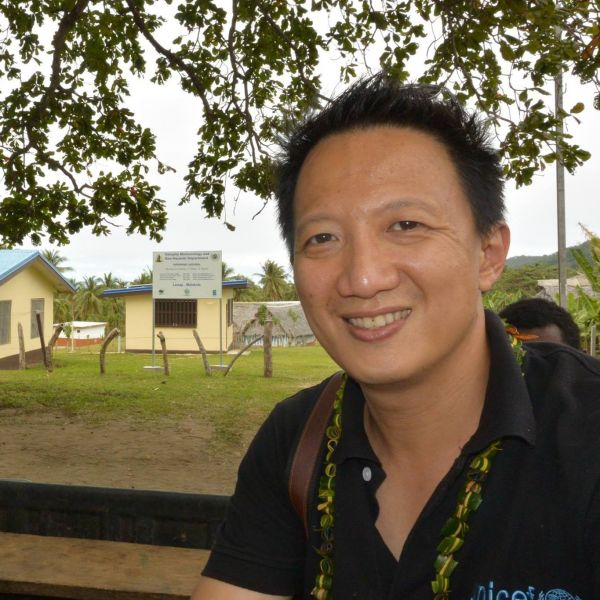 relevant to me. For example, I wrote a project proposal to a donor, and someone from another country office said, ‘hey, how about we change one of the indicators? Instead of the number of people trained, we want to know the percentage of people who have improved their knowledge on parenting.’ Thank God I have learned that I can do a pre- and post-test, or I can do a case study, and I can present that evidence. Imagine if I had no degree in evaluation, and someone changed my indicator. I would have been struggling!”