AERC Hosts: A/Prof Carlo Perrotta 'Whack the prompt in there and see what it says': Educational Encounters with Communicative AI
Share via
Abstract: AI agents and chatbots have rapidly become commonplace in multiple mundane settings, from schools to workplaces. In this study, we deployed the ethnomethodological concept of encounter to carry out a contextual analysis of human-AI communication. Encounters are described as mundane situations – naturally occurring or facilitated - where people and AI come together and engage in distributed communicative sensemaking. Through fieldwork in a language school for international students, we describe three typologies of communicative encounter: a) past incidents, b) moment-to-moment roleplaying, and c) tactical motions. The analysis shows that emerging forms of human-AI communication unfold situationally, by devising explanations shaped by contextual and subjective factors. A focus on communicative encounters challenges the rhetoric of seamless augmentation that accompanies generative AI in education and in other settings, raising critical questions relevant to the widespread adoption of this technology.
RSVP: AERC-info@unimelb.edu.au
| Time | 12-1 pm AEST |
| Date | 20 May 2025 |
| Location | Faculty of Education, Level 9 Conference Room (915), 100 Leicester Street, Carlton Victoria 3053 (or join via Zoom https://go.unimelb.edu.au/qr6p Password: 188289) |
Bio:
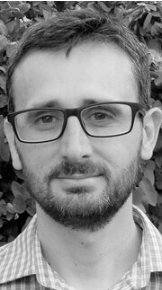
Carlo is Associate Professor of Digital Education at the Faculty of Education, University of Melbourne. His research examines the role of technology in multiple aspects of education, from pedagogy to policy. His recent work focuses on automation and Artificial Intelligence and his articles have been published in several field-leading journals at the intersection of education studies, technology-enhanced learning and media studies. His research has been funded by large international bodies such as the Australian Research Council, the European Commission, and the UK’s ESRC.