Understanding Relationships Between Structural and Process Quality in Secondary Education in the Philippines
Project Details
This project investigates how structural and process quality factors influence teaching and learning in secondary schools in the Philippines. Funded through the University of Melbourne’s McKenzie Fellowship scheme and conducted at the Assessment and Evaluation Research Centre (AERC) and in collaboration with the University of the Philippines Integrated School, the study aims to better understand the conditions that support effective and equitable education.
Determining the ‘quality’ of teaching is a complex process, necessitating a nuanced, context-specific understanding. Teaching and learning are shaped not only by classroom practices, but also by intersecting structural conditions, including infrastructure, access to resources, language of instruction, and broader challenges such as poverty and climate-related disruptions. Despite growing access to secondary education across LMICs, including the Philippines, these persistent challenges continue to affect student achievement, engagement and well-being. This project responds by centring teachers’ voices and experiences, recognising their critical role in defining and enacting quality teaching within their local contexts.

The study adopts a mixed-methods approach guided by the World Bank’s Teach Secondary classroom observation framework, co-developed by Dr. Ezequiel Molina (World Bank Global Education Practice) and Dr. Emma Carter (Former Consultant at the World Bank Global Education Practice and current McKenzie Fellow at the University of Melbourne). While Teach Secondary, as well as other comprehensive assessments of teaching quality, are designed as adaptable tools, limited guidance exists on how to contextualise them meaningfully, particularly regarding whose voices should inform this process. This study addresses that gap by employing a participatory approach, working with secondary teachers across school sites in Candon and Quezon City.
Using focus group discussions and Delphi-method surveys, the research explores:
- Key structural and process factors that support effective teaching and learning within secondary education in the Philippines
- How these factors influence student outcomes such as engagement, achievement, and well-being
- The relationships between school conditions and classroom practices in diverse contexts in the Philippines
- How teacher voice can inform the contextualisation and adaptation of teaching quality measurement tools
This project will generate valuable evidence to:
- Inform education policy and system-level decision-making in the Philippines and other contexts within Asia Pacific
- Support the development of contextually relevant and equitable teaching practices
- Contribute to the validation of the Teach Secondary framework
- Provide a participatory model for adapting global education tools through teacher voice
- Strengthen understanding of how teaching quality can be meaningfully defined and measured in diverse settings
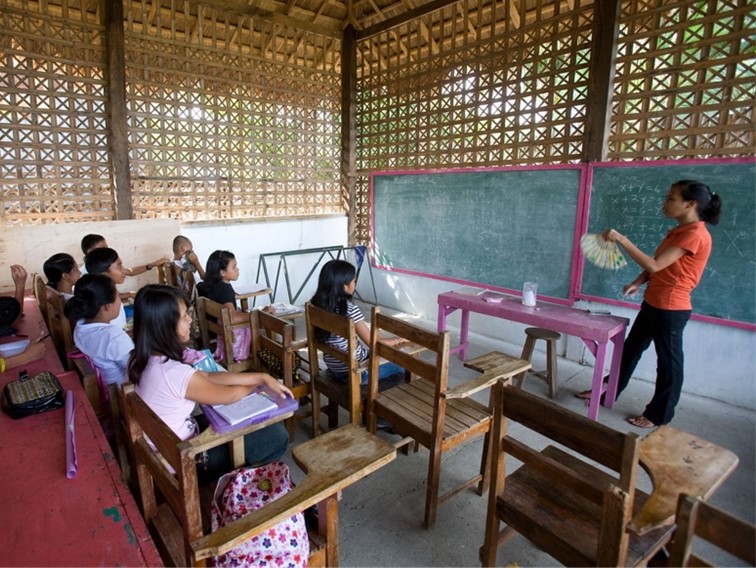
By focusing on both structural conditions and classroom processes from different sites within the Philippines, and by foregrounding teacher voice, this study seeks to develop a contextually grounded understanding of teaching quality that can inform both the adaptation of existing tools and the design of future measurement approaches. In doing so, it contributes not only to improved local relevance of teaching quality frameworks, but also to broader discussions about validity, equity, and inclusion in global education research.
Researchers
Dr Emma Carter (Principal Investigator)
Professor Therese N. Hopfenbeck
Collaborators
Assistant Professor Lady Angela M. Rocena (University of the Philippines Integrated School)
Aloudia Tristan C. Franco (University of the Philippines Integrated School)
Maria Olivia O. Nueva España (University of the Philippines Integrated School)
If you would like to receive additional information about the project, please email the lead researcher, Dr Emma Carter at: emmacarter@unimelb.edu.au