Reframing reading as a radical countercultural act
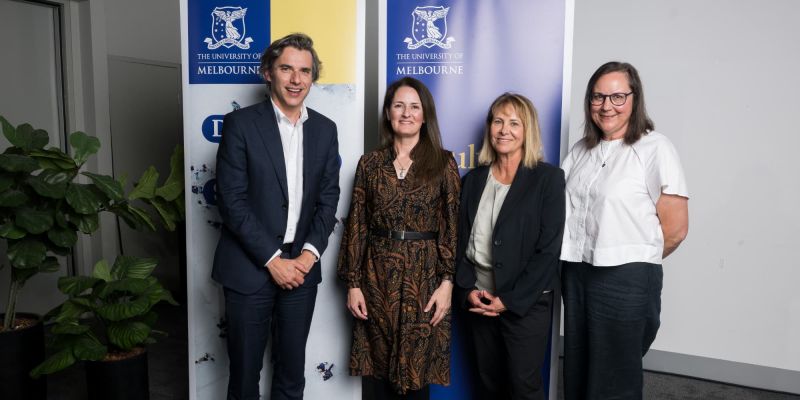
The Dean’s Lecture Series final event for 2025, The Radical Act of Reading, delivered an inspiring and thought-provoking celebration of literacy, learning and the transformative power of books, led by one of Australia’s most influential education leaders, Dr Jennifer Buckingham OAM.
Jennifer Buckingham, Executive Director of the Centre for Education Statistics and Evaluation (CESE) at the NSW Department of Education, has long been a driving force behind evidence-based reading instruction and equity in literacy.
In a world dominated by screens and constant stimulation, reading demands patience, deep thinking and focus, qualities Jennifer believes are increasingly under threat.
Her career is marked by landmark achievements including the national influence of phonics screening advocacy, the launch of the widely respected Five from Five initiative in 2015, and her persistent push for free, professional learning for teachers across Australia. Her work has consistently focused on reducing illiteracy and improving policy to ensure that no child leaves school unable to read.
The evening was a testament to the urgency and resonance of Jennifer’s message: reading still matters profoundly 25 years into her career advocating for literacy reform.
Does it matter if kids read anymore?
Jennifer did not shy away from confronting hard truths prompting the audience with provocative questions. Her emphatic response was grounded in history and neuroscience stating that for over 500 years, reading has always been seen as radical.
“In an age of speed and distraction, sitting quietly with a book has become a deliberate act of resistance,” she advocated. “Slowness, attention, not interruption.”
“Real reading might become the pursuit of the elite,” she cautioned, noting the danger of a “democratic deficit” where lack of knowledge undermines participation in society. Books, she argued, are “an equity lever” and a gateway to cultural capital, critical thinking and lifelong learning.
She also explored how the cognitive patterns shaped by screen reading differ markedly from print reading, warning that the prevalence of technology has altered attention regulation and cognition, particularly among young people.
A vision of reading reaching far beyond functional literacy
In 2024, the Australian Bureau of Statistics reported approximately 320,377 full-time equivalent (FTE) teachers across 9,653 schools in Australia. Against this scale, Jennifer raises an important question: how can we ensure all teachers are consistently adopting evidence-based approaches to teaching reading?
In the recent past Jennifer said teaching methods were ineffective and failing to teach all children, pointing to a time when universities were “insufficiently concerned about the number of children leaving school not knowing how to read.”
“Reading is more than literacy, it is a loftier pursuit of understanding,” she said, championing aspirations that extend beyond decoding words to cultivating deep comprehension and pleasure. “Once children can read, we need to think about will they read, and what will they read”. While acknowledging that “not everyone will love reading,” she insisted, “it shouldn’t be because they can’t.”
Jennifer traced the connection between strong early reading and long-term motivation, noting that “early reading is a motivator,” while disengagement in later years leads to worrying trends, with “reading for pleasure numbers… grim.”
She painted a vivid picture of how vocabulary and knowledge shape children’s ability to express themselves, warning that without language, frustration can manifest in destructive ways, even intersecting with juvenile crime.
Central to her argument was the importance of knowledge itself
“We human beings just love to know things,” she explained. “We get a buzz when answering a question correctly.”
Knowledge, stored in long-term memory, enables children to expand their horizons, build insight and develop confidence. Referencing Jane Goodall’s childhood love of the Tarzanbooks, Jennifer illustrated how reading can shape identity and ambition.
She acknowledged global models of success, such as Ireland, where literacy is culturally respected, technology use is lower, and homes are rich in reading materials and music. The “x factor,” she asserted, is culture.
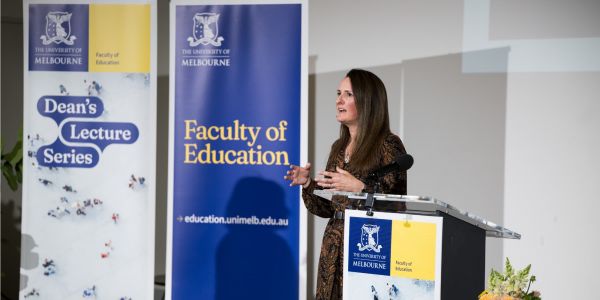
In a poignant moment, Jennifer linked the evolution of reading to society’s ongoing anxieties. Just as the printing press once caused panic with fears that books could contain “mind viruses” - today AI and digital summaries threaten to create “an illusion of knowledge.”
“AI has no author and therefore no authority and no accountability,” she warned, urging the audience to avoid the temptation of shortcuts that diminish deep learning.
The reading wars are over
The evening was ultimately hopeful, balancing critique with optimism asserting that “the reading wars are over,” highlighting government commitments to phonics testing and explicit teaching.
“We are what we read,” Jennifer reminded the impressive crowd, “and now it’s our turn to preserve the act of deep reading.”
Her call to action was clear and powerful: “We must raise a generation of readers.”
More than a lecture, the event stood as a powerful rallying call for educators, parents and leaders to defend, celebrate and sustain one of humanity’s most vital and enduring practices: reading.
Want to know more?
Dr Jennifer Buckingham OAM is recording an upcoming episode of University of Melbourne’s Faculty of Education podcast Talking Teaching. Sign up to ensure you’re first to hear about its release.