From rankings to readiness: Rethinking success metrics for the next generation
Each year, the release of ATAR results sharpens national attention on how we measure student achievement and provide pathways opportunities to school leavers.
While rankings remain influential, they also highlight persistent concerns about equity, transparency and accessibility - particularly for students whose strengths, circumstances or learning pathways are not easily captured by traditional measures.
As Australia looks ahead to 2026, there is growing consensus that assessment and admissions systems must continue to evolve. The challenge is not only to maintain rigour, but to broaden recognition of capability in ways that promote fairness, inclusion and trust - ensuring all learners can see themselves reflected in how success is defined and rewarded.
A collaborative vision for change: AssessFest
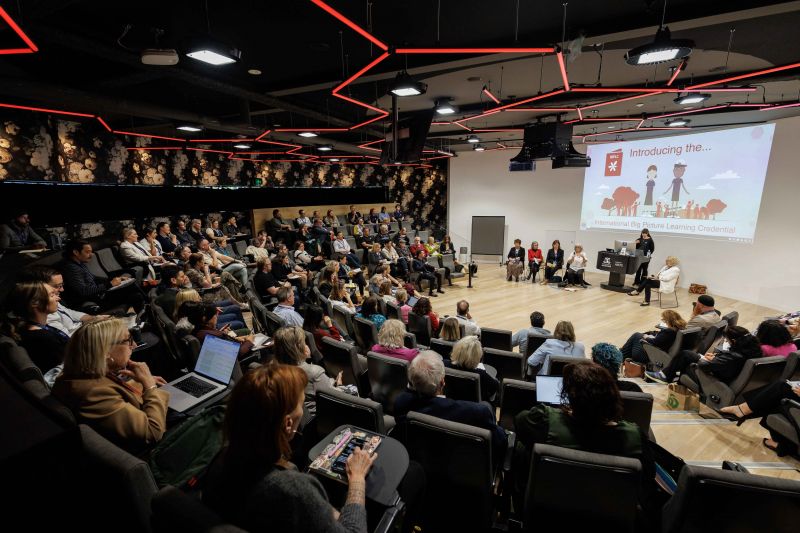
In November, the University of Melbourne convened a national meeting of 330 leading educators, researchers, industry representatives and policymakers for the inaugural AssessFest event to set the stage for ongoing dialogue, strengthened partnerships and transformative change in Australian education.
AssessFest was organised by the team at Melbourne Metrics, and formally opened by Professor Marek Tesar, Dean of the Faculty of Education. The occasion marked the first in a three-part annual series exploring the future of assessment, recognition and educational pathways in Australia - highlighting the need for urgent reform in the curriculum offered in schools and universities, how they deliver it, and how it is assessed.
“Learning is constrained when assessment is limited to narrow measures of the basics, or content knowledge that is easily mastered by AI bots,” said Professor Sandra Milligan, Executive Director, Melbourne Metrics.
“Leading schools are showing the industry how to get beyond that, enhancing the uniquely human capabilities and competencies that will enable our youngsters to thrive at school and beyond.”
Competency-based approaches to teaching and learning to better prepare students for the modern era were showcased. Challenges and opportunities were discussed, including the importance of using innovation to increase fairness, productivity, transparency and equity in assessment and admissions processes.
Professor Tesar emphasised the significance of the gathering, by introducing new assessment models and rethinking how educational success is defined and recognised across systems. He welcomed the opportunity to promote ongoing dialogue about the need for transformative change in Australian education.
Rethinking learning in the age of AI
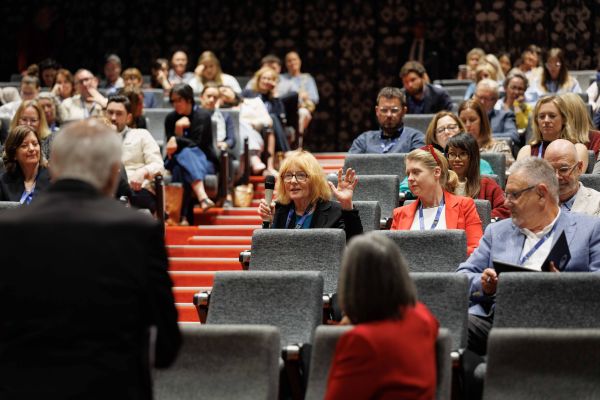
Speakers warned that AI can now deliver facts and processes, essays and designs at the click of a mouse - and much of what is taught today will be obsolete tomorrow, and ‘post truth’ influences are endemic. There is more known in any discipline or domain than any one person can master in a lifetime, and the knowledge base is expanding and changing rapidly.
Young people need to be more competent in managing their own ongoing learning, be more critical of what they hear, have a good moral compass to navigate their options, and be more attuned to their own, and their community’s purpose.
Spotlight on innovation: School Lightning Fair
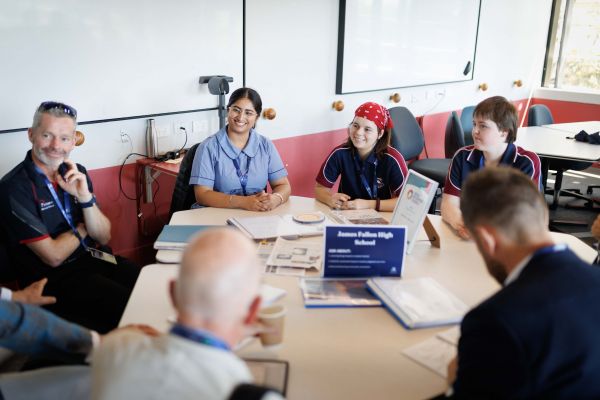
Thirty leading schools from across Australia and New Zealand demonstrated their innovative practices in a School Lightning Fair. Students, teachers and leaders from the schools described how they are bringing new learning ambitions to life through aligned learning and assessment design.
Matching for Success: ARC Linkage
The convening also launched the Matching for Success project, an Australian Research Council Linkage Project. This is an ambitious project aiming to redesign next generation approaches to selecting school leavers for university, exploring how modern assessments and credentials can supplement or replace information provided through mechanisms such as the ATAR.
This project is led by Professor Milligan in association with academics from the University of Melbourne, the University of Sydney and the University of Newcastle, in collaboration with nine major industry partners.
It looks to shift the focus from a simple ranking of students on cognitive measures to recognising student competence more broadly, enabling students to better understand their strengths and opportunities. It also supports recruiters and selectors to better match candidates to opportunities in which they can succeed.
Stay connected
For more information or to get involved in future events visit Matching for Success.
Thank you to our Industry Partners
The Matching for Success - ARC Linkage acknowledges the University of Melbourne (Lead), in collaboration with the University of Sydney and the University of Newcastle along with 9 partner organisations including:
- Victorian Curriculum and Assessment Authority
- SACE Board of South Australia
- Department for Education, Children and Young People, Tasmania
- Universities Admissions Centre (NSW & ACT) Pty Ltd.
- Victorian Tertiary Admissions Centre
- South Australian Tertiary Admissions Centre
- Big Picture Education Ltd
- Koshland Education Innovation Ltd
- Education Services Australia Ltd