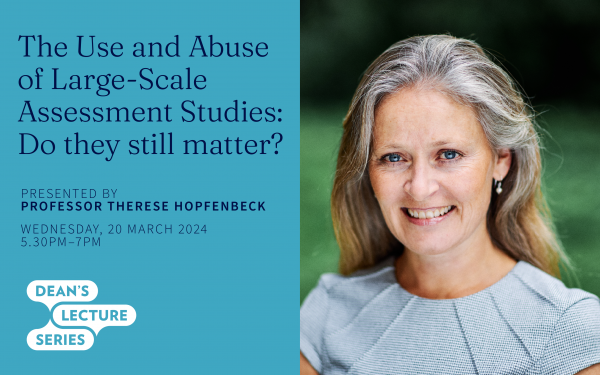
The Use and Abuse of Large-Scale Assessment Studies. Do they still matter?
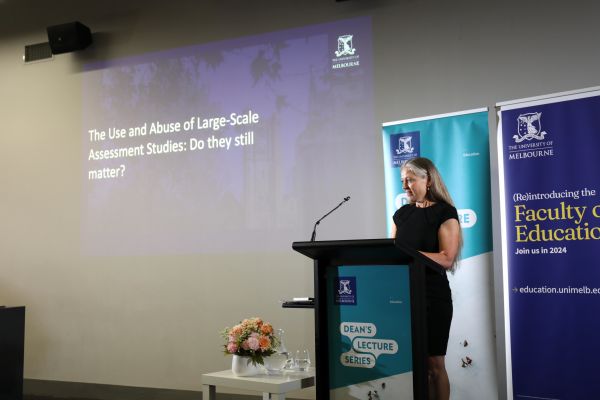
Professor Therese N Hopfenbeck shares her expertise at the first Dean's Lecture for 2024. If you missed it the recording is now available.
Global tests, like the OECD's Programme for International Student Assessment (PISA), are driving what counts as valuable learning, impacting national assessment systems worldwide.
But what have large-scale international assessment studies really taught us about student learning, and how can these lessons help us mould the future of education?
Recognised as a leading assessment study, PISA evaluates students' proficiency in science, mathematics, and reading literacy as they conclude their compulsory education. The results have unveiled wide variation in student performance and educational outcomes across countries, with many Western countries scoring average or below-average scores.
These rankings spark considerable media attention, unfortunately, seldom providing attention to more important matters tested in PISA, such as students’ approaches to learning, self-regulation, critical thinking and attitudes and knowledge of climate change.
Backed by empirical studies based on PISA data over more than two decades, Professor Therese Hopfenbeck brought a wealth of expertise to her lecture, exploring the significance of global assessment tests and urging the audience to reconsider the types of learning that are important to evaluate and how the findings must be contextualised.
A recording of the lecture is now available