What if distraction is exactly what climate engagement needs?
This question has been considered at SWISP Living Lab in residence at Science Gallery Melbourne for the DISTRACTION exhibition season (26 July 2025 – 2 May 2026) with ‘Learning with the Land: Dispositions for Hacking the Anthropocene.’
SWISP (Speculative Wanderings in Space and Place) Living Lab, was co-led by Drs Kate Coleman and Sacha Healy, with doctoral researchers Yvette Walker, Anna Farago, Cassie Truong and Katerina Undo.
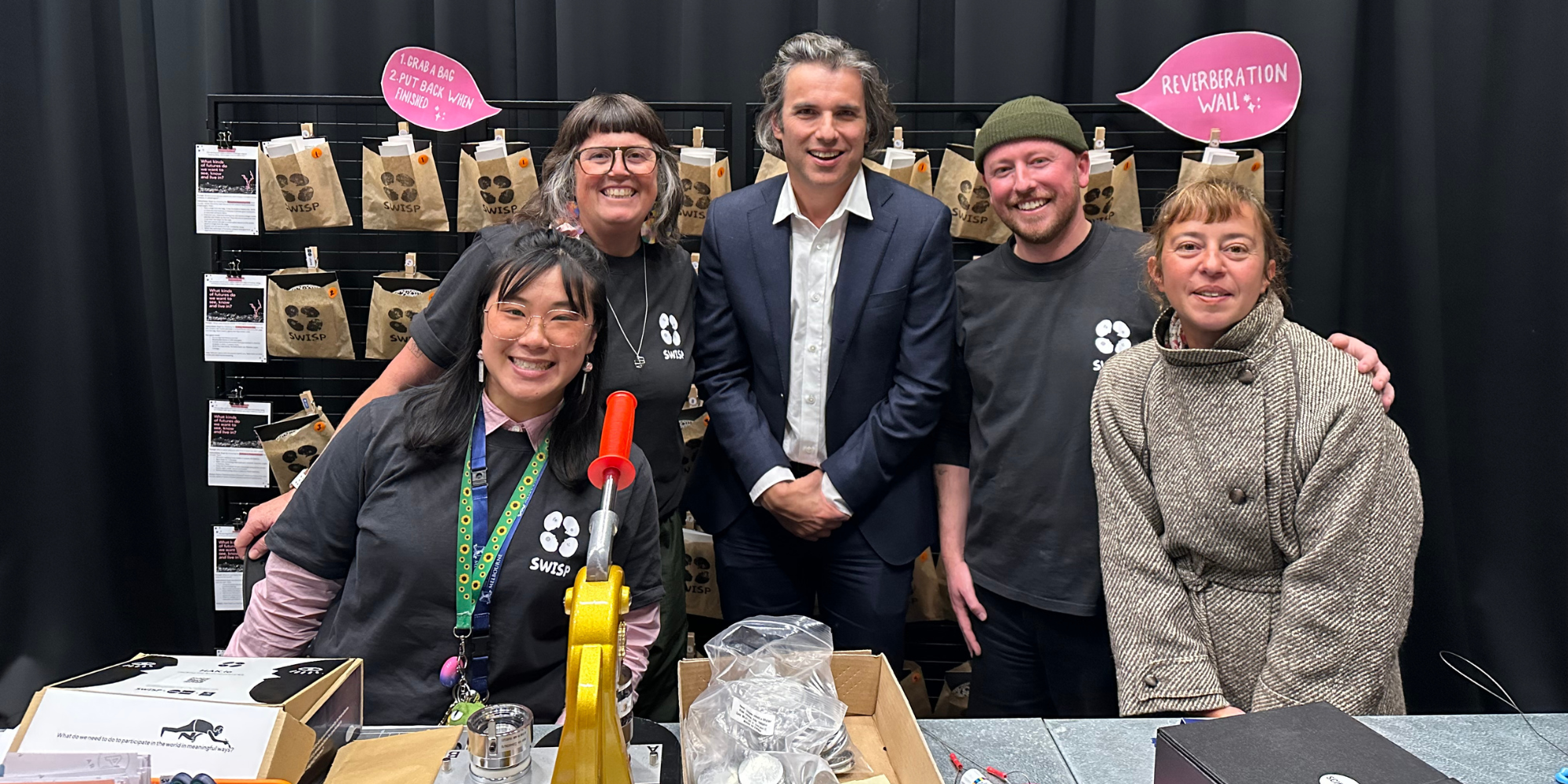
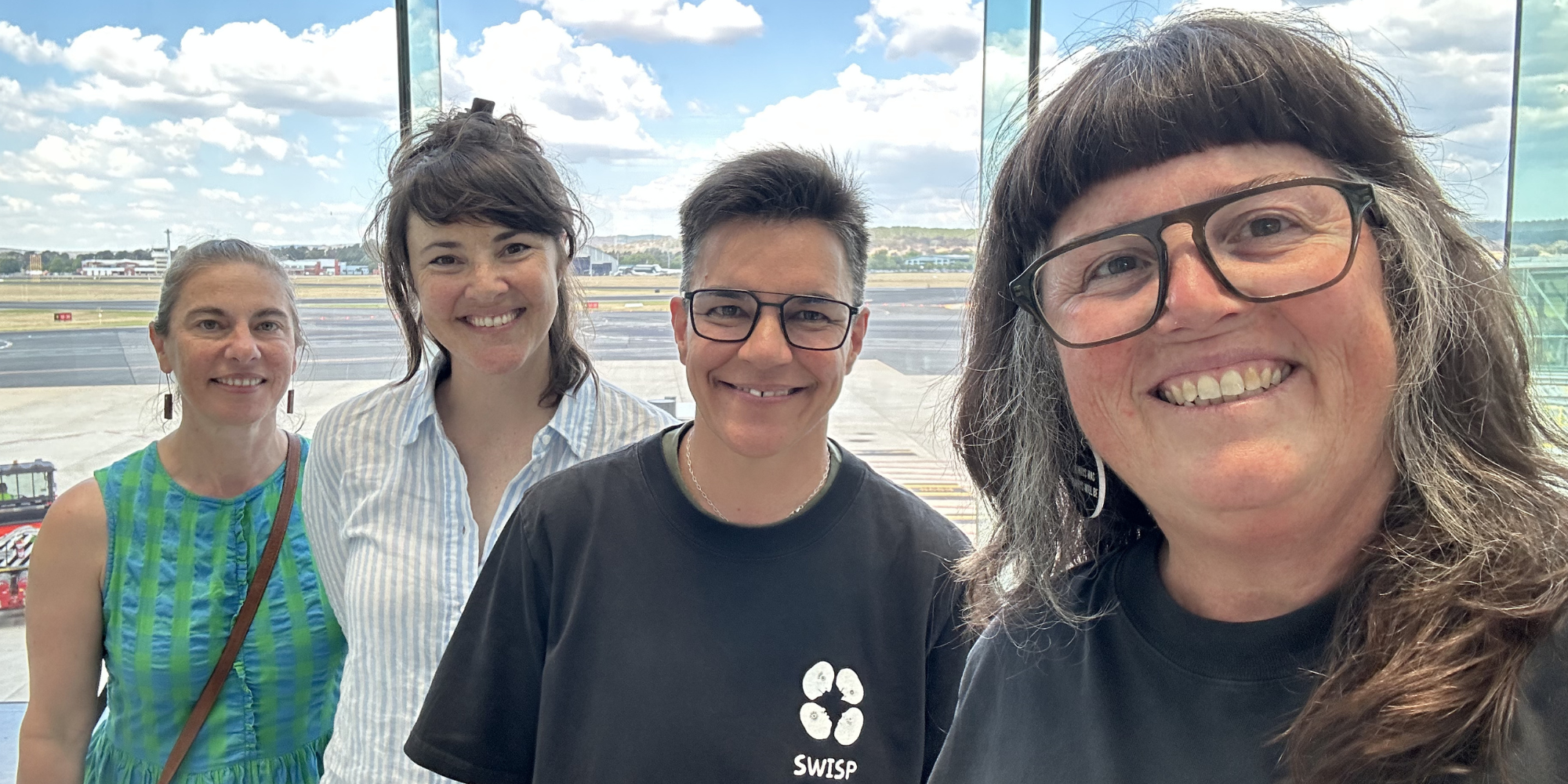
Dean, Faculty of Education, Professor Marek Tesar, with the SWISP Living Lab crew
Climate change is often treated as a science communication problem. We are saturated with knowledge about climate science and still struggling to mount a sustained response. Reports of increasingly catastrophic climate-related events accumulate, headlines intensify, and audiences oscillate between urgency and fatigue. Then we get distracted.
The question is no longer how to capture attention
The Lab brought together artists, educators, researchers, young people aged 14-29, and intergenerational public to explore how creative, participatory practices might reshape climate engagement. It provided an evolving environment - part studio, part archive, part gathering place, and part living breathing artwork - where gallery visitors enter, leave, return and contribute over time.
“We need to ascertain what attention looks like now - and how we might work with it - rather than against it,” said Dr Coleman.
Across the cultural sector, museums and galleries are increasingly positioned as sites of public climate communication and education. Exhibitions translate complex science into visual form, programs invite reflection, and institutions take on the role of civic educators and public pedagogues.
“Much of this work assumes a stable, focused viewer,” Dr Coleman explains. “Someone who already has the literacy to access a museum or gallery, who will read, absorb and ultimately has the fluencies to carry knowledge forward.”
Less loss of focus, more a different kind of attention
The Living Lab residency was designed in response to this assumption sitting uneasily within contemporary life, where attention is dispersed, partial and continually interrupted. Instead of trying to hold attention in one place, the Lab has worked with attunement, observation and movement.
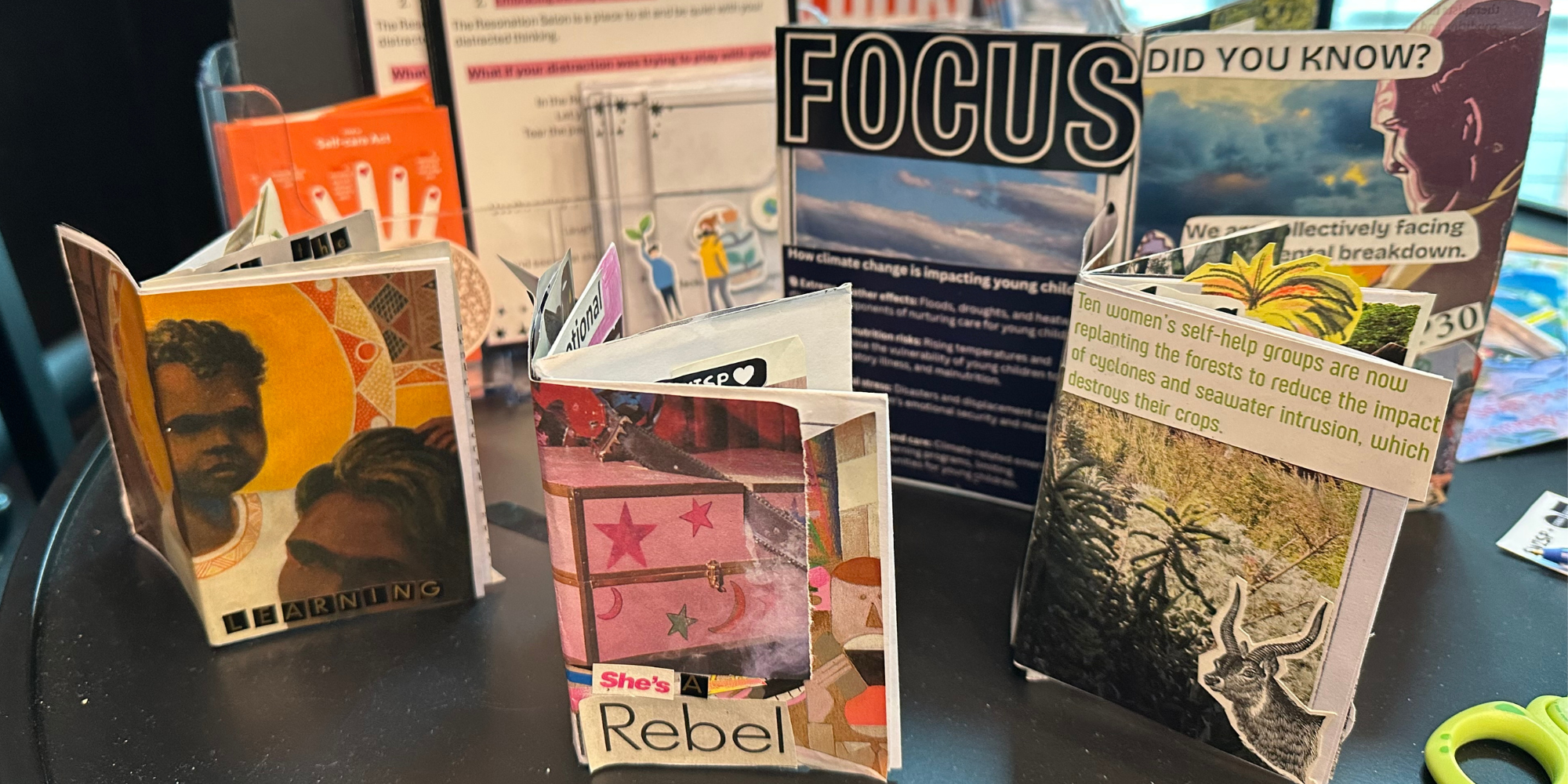
Visitors might pause briefly to read a fragment of a climate story on the wall, add their own image to a collective collage, make an artefact, or simply notice something that lingered in a walk through the exhibition.
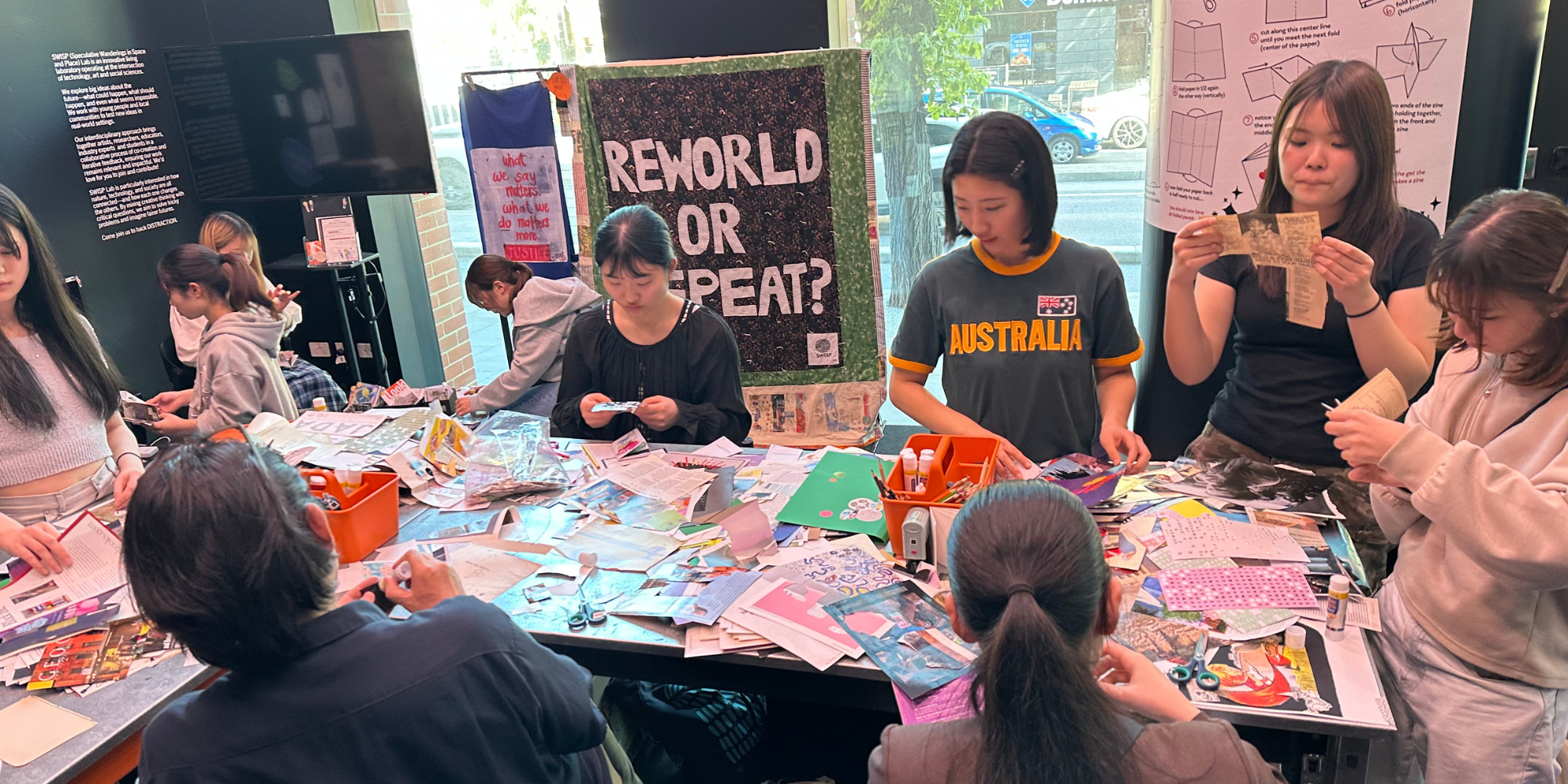
The Lab’s leaders explain that focus is distributed, relational and shaped by the encounter. Rather than positioning visitors as receivers of curated knowledge, the space has invited contribution.
“One of the clearest shifts we witnessed is how visitors move from receptive audience to active participant,” said Dr Healy. “Through collective storytelling, zine-making, drawing and speculative thinking, they generate a living archive of responses that reflect what they feel, fear and hope for.”
Implications for how we think about climate engagement more broadly
There remains a risk of reinforcing a model in which knowledge is produced in one place and received in another.
“If we understand climate engagement as something that happens through meaningful participation and activation, then the role of cultural institutions begins to shift,” offers Dr Coleman.
The SWISP Living Lab shows that designing for small, accessible entry points enables people to engage on their own term, and that repetition and return enables experiences where contribution can be layered over time, allowing meaning to emerge gradually.
“Working with distraction acknowledges that people are already navigating complex, and often-overwhelming conditions in the Anthropocene – a time of rapid and transformative changes characterised by human activity becoming the dominant influence,” said Dr Coleman.
“It recognises that action does not always begin with clarity, but often with a feeling, a sense, a question, or a moment of recognition.”
The Living Lab as global advocacy
SWISP Living Lab moves less like a program and more like a current circulating through places, institutions, and atmospheres where learning, politics, and imagination meet.
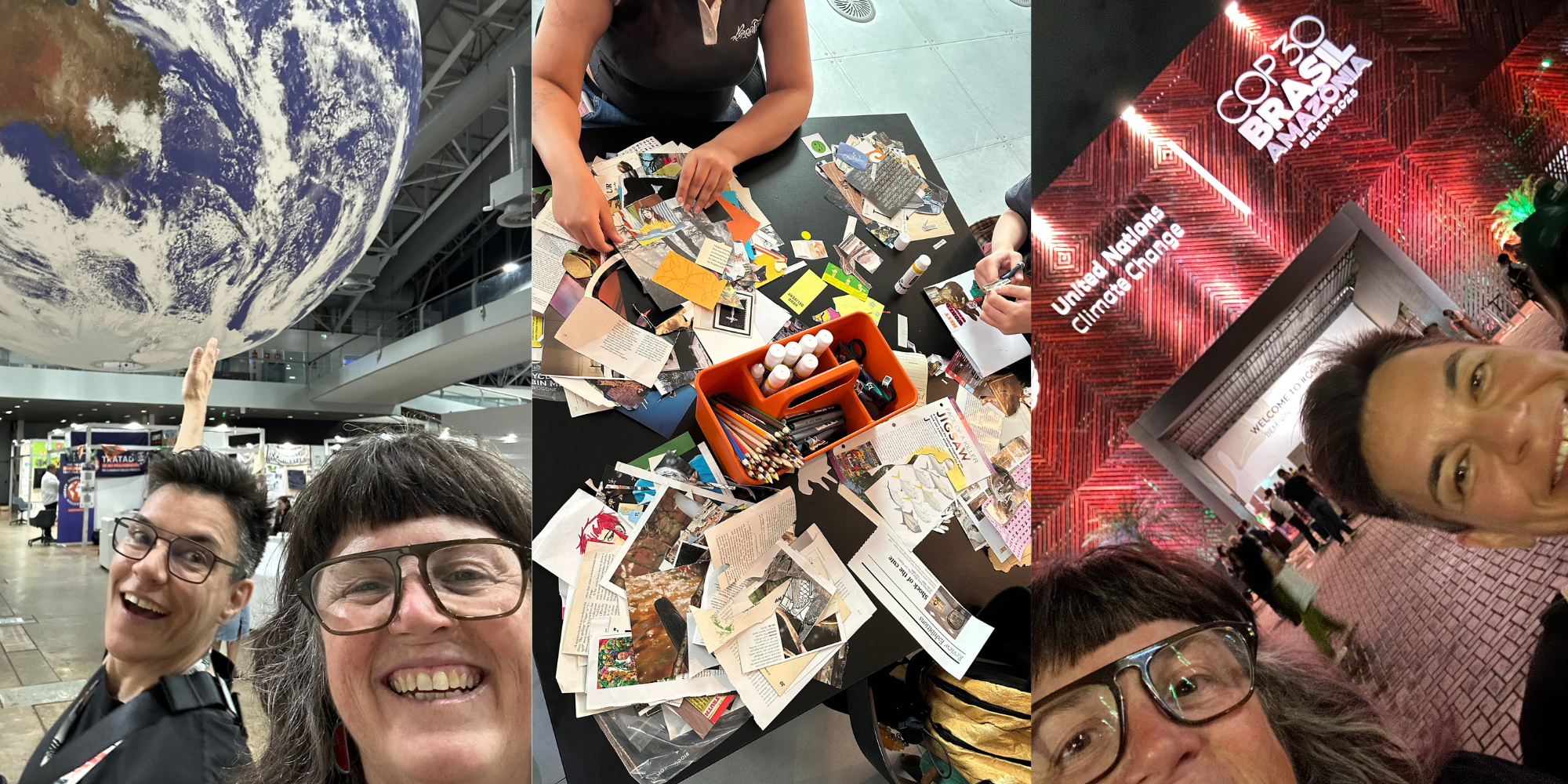
What began in Melbourne has travelled outward and returned differently: through Delhi and Jaipur in India, across sites in the United States and Canada, and into the charged global arenas of UNFCCC COP gatherings COP28, COP29, and toward COP30, before folding back into national cultural contexts such as the National Gallery of Australia in Canberra.
SWISP Living Lab comes in many guises. It is a Model United Nations room where futures are rehearsed, the University of Melbourne Delhi Centre where dialogue becomes method, and the distributed network of Science Gallery sites in Atlanta, Bengaluru, and Melbourne, where publics co-produce knowledge.
Across these geographies, SWISP Lab composes a living, shifting infrastructure that refuses to stabilise knowledge in a single place, instead asking: what happens when learning moves with the world, and when the world itself becomes the curriculum?
Where to next?
What remains is not a finished product, but a set of propositions for education.
- Climate engagement involves creating conditions.
- Participation generates forms of knowledge that cannot be pre-scripted.
- Distraction might be one way people come to notice, listen, care and act.
In a time when climate communication is struggling to cut through, this is not a minor shift. It asks cultural institutions to reconsider their role as spaces where climate change is not explained, but encountered, felt and responded to together.
The challenge is not to eliminate distraction, or see it as a deficit, but as a possibility for something else.
Catch the team in action
Timed with the opening of EMERGENCE(Y) at Science Gallery Melbourne, Distraction → Action Festival is a three-day public experiment, 8-10 July, an invitation to rethink how we come to know, feel, and respond within the unfolding climate condition.