Senator Jana Stewart shares insights on psychology, culture and creating systemic change
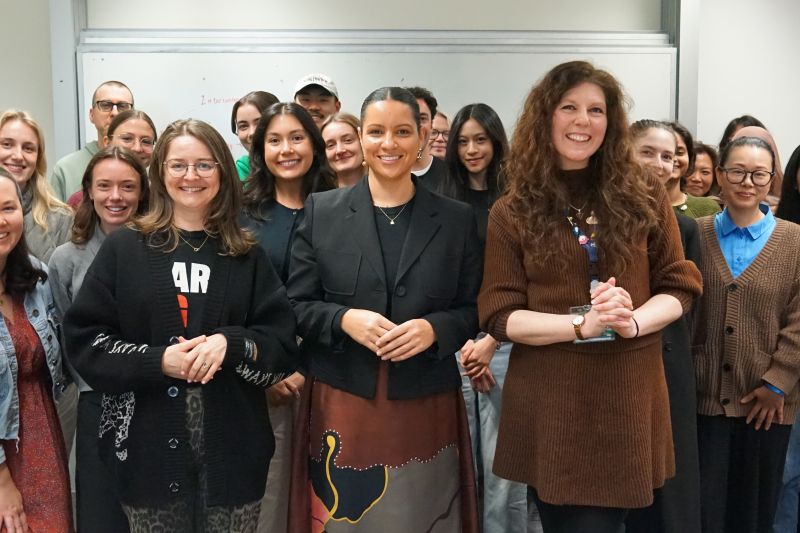
Educational and Developmental Psychology students at the Faculty of Education recently welcomed Senator Jana Stewart for a guest lecture exploring the intersections of psychology, culture, racism, trauma and systems change.
A Labor Senator with previous experience as a family therapist, Senator Stewart drew on her professional journey from family therapy and community services to public policy, politics and the Australian Parliament, reflecting on how her clinical training continues to shape the way she approaches her work in Canberra.
Speaking candidly about her experiences growing up as an Aboriginal woman, Senator Stewart emphasised the profound influence of family, culture and kinship, as well as the importance of recognising the lived experiences that shape children and young people.

For future psychologists, she highlighted the responsibility that comes with holding power in a therapeutic or professional setting. Reflecting on a school experience where statistics about Closing the Gap were presented to her as predictions of her own future, Senator Stewart challenged students to consider the impact of deficit framing and the ways in which professional practice can either reinforce or challenge assumptions about Aboriginal people.
“Deficit framing” can tell a child what their life is going to be like, she explained, while psychologists have an opportunity to create spaces in which people feel heard, believed and understood.
Senator Stewart also reflected on the complex history of psychology and its relationship with Aboriginal communities, noting that psychological approaches have too often been developed “on us – not with us”. She encouraged emerging psychologists to engage critically with this history and consider how their practice can contribute to undoing harm.
Her reflections drew on her involvement with the Parliamentary Inquiry into racism, hate and violence directed at Aboriginal and Torres Strait Islander peoples. The inquiry heard hundreds of submissions documenting experiences of racism across healthcare, education, government, family services and the justice system.
For Senator Stewart, these experiences cannot be separated from psychological wellbeing. Racism can accumulate across a lifetime, she told students, while the effects of trauma can also be carried across generations.
She encouraged students to approach their future practice with cultural safety as a baseline, to be curious about their own biases, and to recognise the importance of self-determination, connection to Country and kinship in treatment planning.
“Psychologists have an important role to walk alongside,” she said, rather than trying to save people.
The lecture also offered students an insight into the possibilities of working beyond individual therapeutic practice to influence broader systems and policy. Senator Stewart reflected on her own career trajectory, explaining that her move into politics was not deliberately mapped out, but emerged through opportunities to create greater impact.
Her message to students was both practical and inspiring: meaningful change can happen in many different settings, and there is value in having people with the right skills and perspectives “in the room” where decisions are made.
The guest lecture concluded with an engaging discussion between Senator Stewart, Kathryn Kallady, Lecturer in the Master of Psychology (Educational & Developmental) program, and students, who explored questions about systemic racism, cultural connection, career pathways and the role of psychologists in creating change.
“To have Senator Stewart join our class was both a humbling and inspiring experience,” said Kathryn. “Her insight and perspectives helped students understand that we have a lot more learning to do but also help understand how our skills can go beyond the assessment and therapeutic space.”
For students preparing to enter the psychology profession, Senator Stewart’s visit provided a powerful opportunity to connect their studies with the realities of practice, policy and lived experience and to consider how they might use their own professional knowledge to contribute to more equitable systems.
“The impact from Senator Stewart visiting the University of Melbourne has given our students hope to help them believe that they can make positive change in the systems that they work and belong in as they continue their learning journey as future psychologists,” said Kathryn.