SCALE Program welcomes Singapore school leaders to Melbourne
From 27–29 April 2026, University of Melbourne’s Faculty of Education hosted 30 principals and school leaders from 12 schools in Singapore as part of the Spatial Competency and Literacy for Educators (SCALE) program.
This three-day professional learning experience brought together leaders from Singapore’s West Zone Cluster 3 for an intensive exploration of how school environments can be designed, used, and evaluated to enhance teaching and learning.
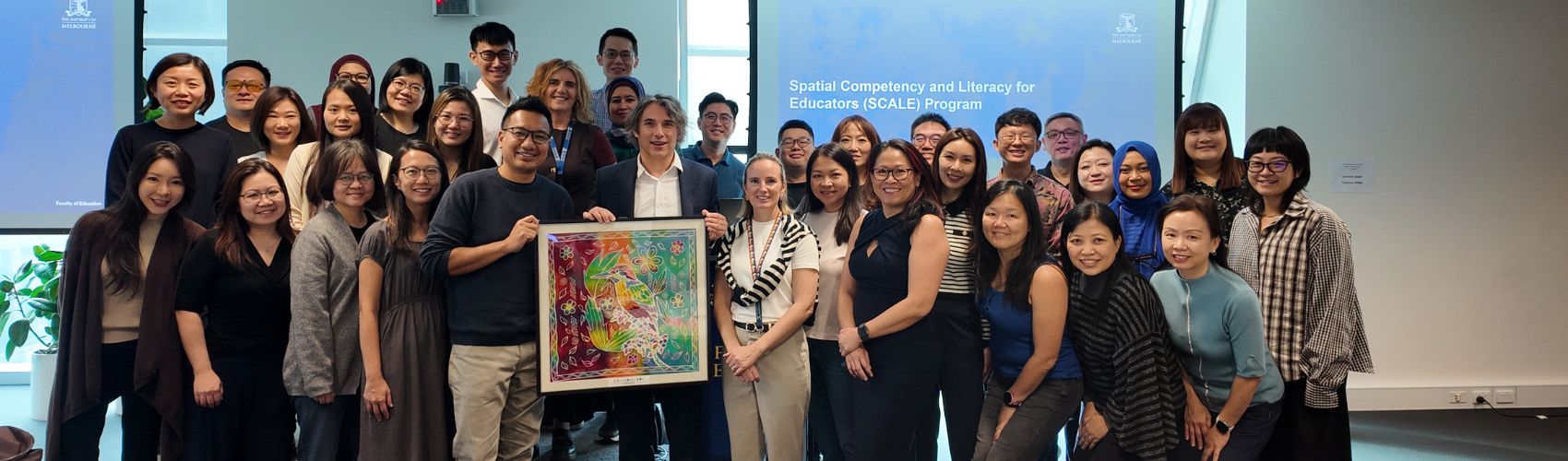
Singapore leaders with Dean, Faculty of Education, Professor Marek Tesar, Associate Professor Marian Mahat, Dr Bree Hurn and Dr Amanda Samson
Building spatial competency for contemporary education
The SCALE program focuses on building educators’ spatial competency, an increasingly important capability in contemporary education systems seeking to align pedagogy, learning environments, and student outcomes.
Developed and led by Associate Professor Marian Mahat, together with Dr Bree Hurn, Dr Amanda Samson and Dr Chris Bradbeer, participants engaged in a structured series of five modules addressing key dimensions of innovative learning environments.
These included the rationale for spatial design, teaching and learning practices, student engagement, teacher collaboration, and approaches to evaluation and scaling.
Leadership for innovative learning environments
Throughout the program, participants examined international research and policy developments shaping learning environments, while also considering practical strategies for implementation within their own school contexts.
A strong emphasis was placed on leadership, with sessions designed to support school leaders in driving change and fostering collaborative cultures that maximise the potential of innovative spaces.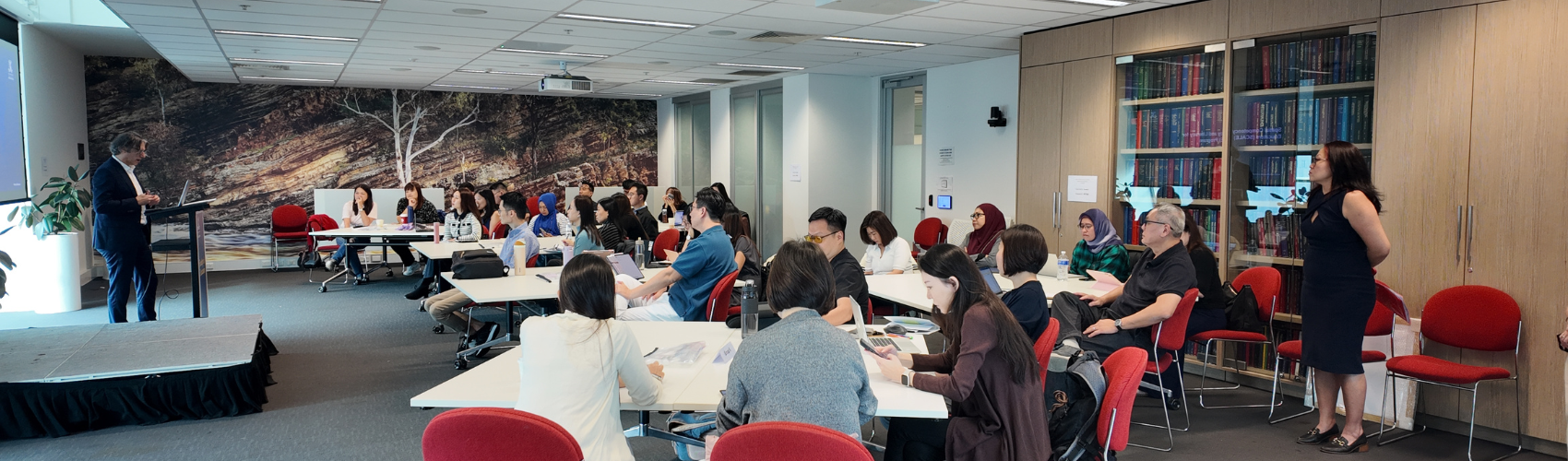
Professor Marek Tesar, Dean, Faculty of Education presenting to the delegation
Learning in action through school visits and inquiry
This bespoke program featured two distinctive elements: school site visits across Melbourne and the implementation of a micro inquiry in participants’ home schools.
The site visits provided valuable opportunities to observe how research-informed design principles are enacted in real-world settings.
Sincere appreciation for participating schools including Port Melbourne Secondary College, Centre for Higher Education Studies, Barayip Primary School, Brinbeal Secondary College and Learning Environments Australasia for their generous partnership contributing to the success of the program experience.
By engaging directly with Australian schools, participants explored how spatial design can influence student wellbeing, engagement, and social development, as well as support effective teaching practices and professional collaboration among staff.
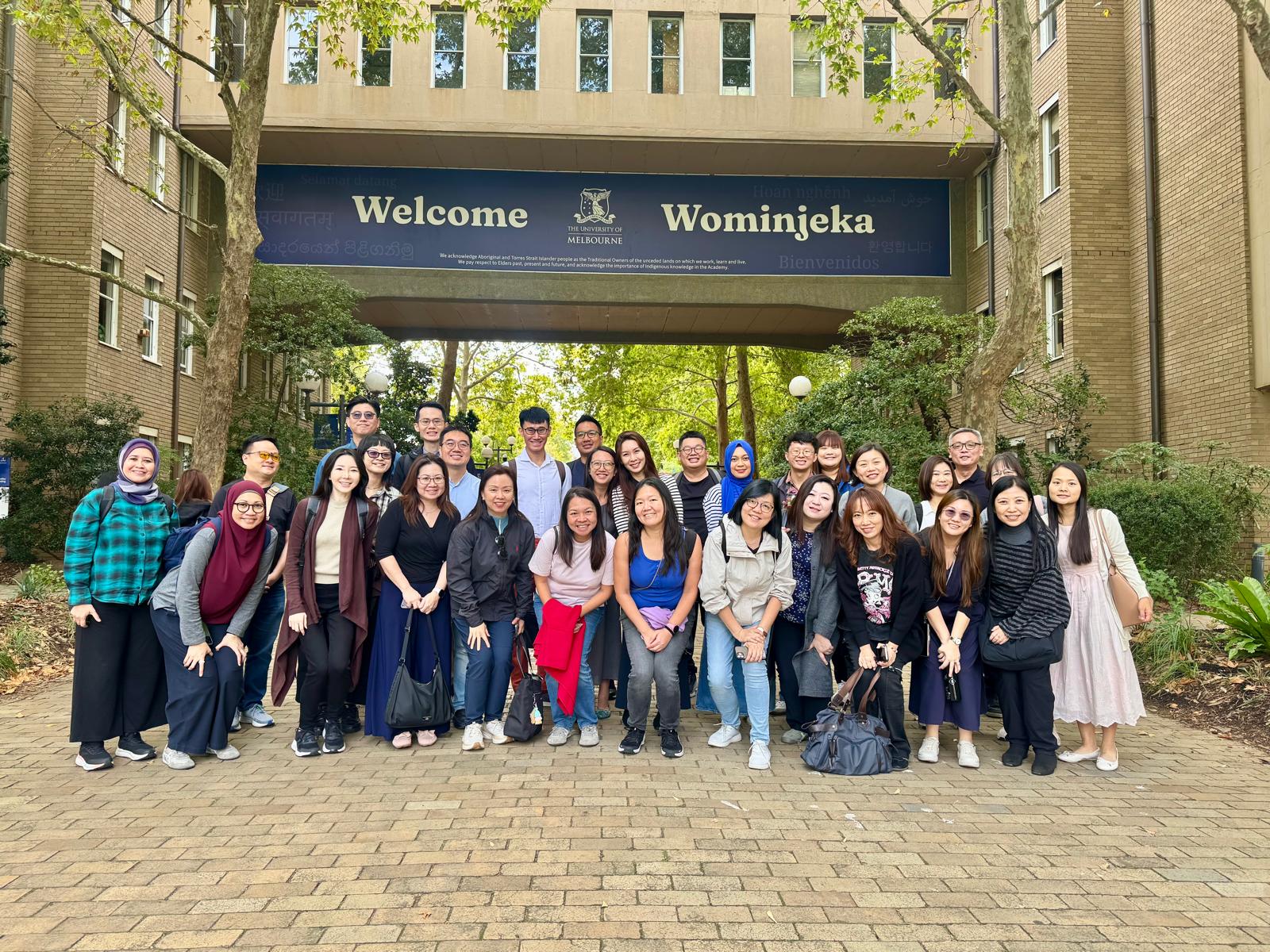
The Singapore delegate in front of our iconic Wominjeka sign during a tour of the campus
Micro inquiry extends learning beyond the program
Involving a small, focused, and context-specific investigation into an aspect of the school learning environment, inquiry enabled participants to test ideas in practice.
By engaging in disciplined inquiry, school leaders generate evidence about what works in their own settings, informing iterative improvements to pedagogy and learning environments.
This significant approach bridges theory and practice, supports data-informed decision-making, and builds a culture of ongoing professional learning and innovation within schools.
"I’m looking forward to implement what I’ve learnt from the SCALE program to lead my school in designing purposeful learning spaces that can better support teaching, collaboration and student engagement in my school," shared Mr Muhammad Fadylla Rashiman, Principal, Corporation Primary School.
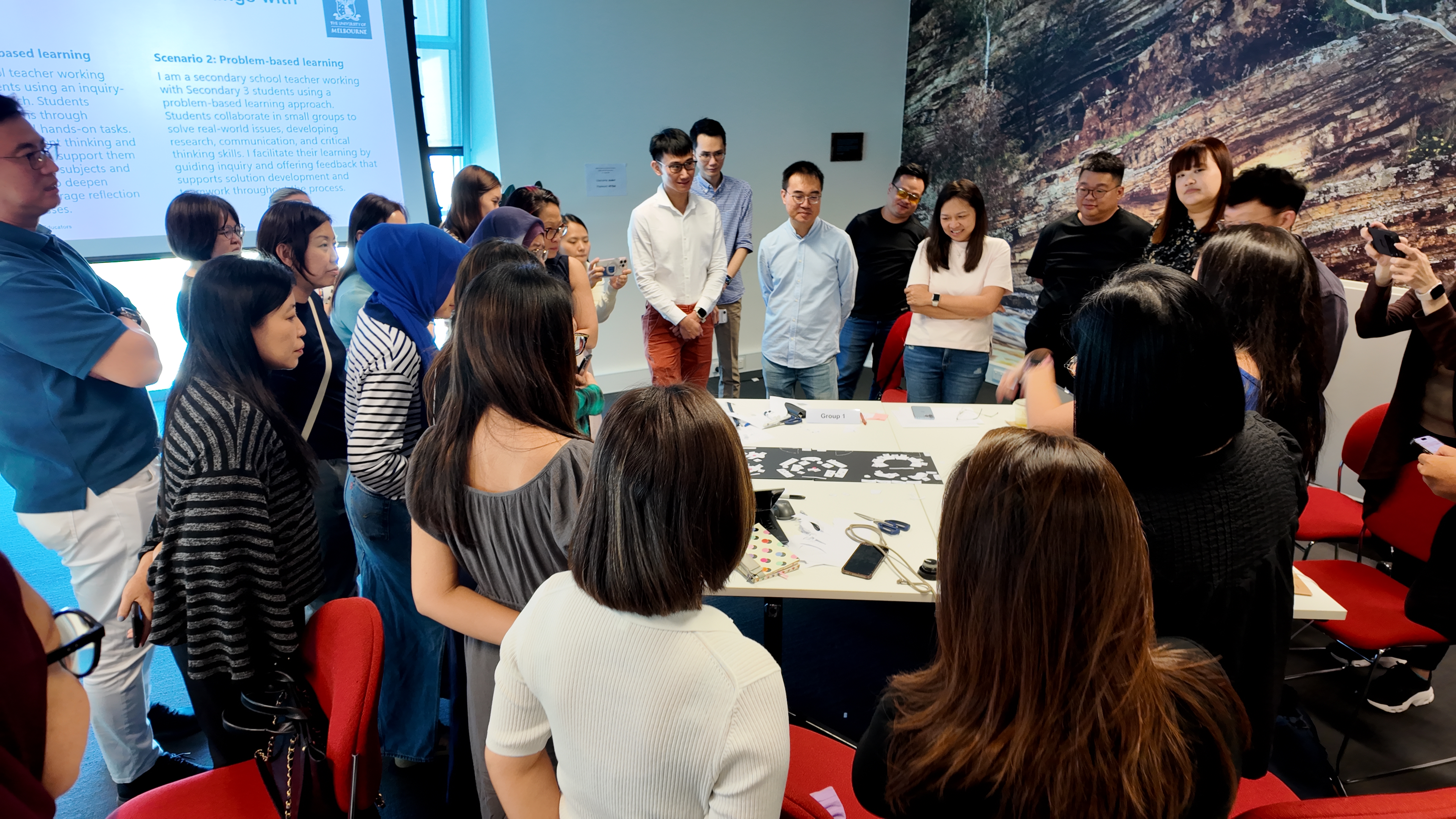
Rich professional dialogue amongst participants around designing school learning environments
Collaboration and shared expertise driving impact
The program facilitated rich professional dialogue encouraging the exchange of ideas, experiences, and challenges across diverse school contexts.
This collaborative dimension is central to the SCALE approach, recognising that meaningful innovation in education is often driven by shared inquiry and collective expertise.
By the end of the program, participants had developed a deeper understanding of school learning environments, enhanced their skills in designing and evaluating flexible and agile spaces, and strengthened their leadership capacity to guide spatial and pedagogical innovation within their schools.
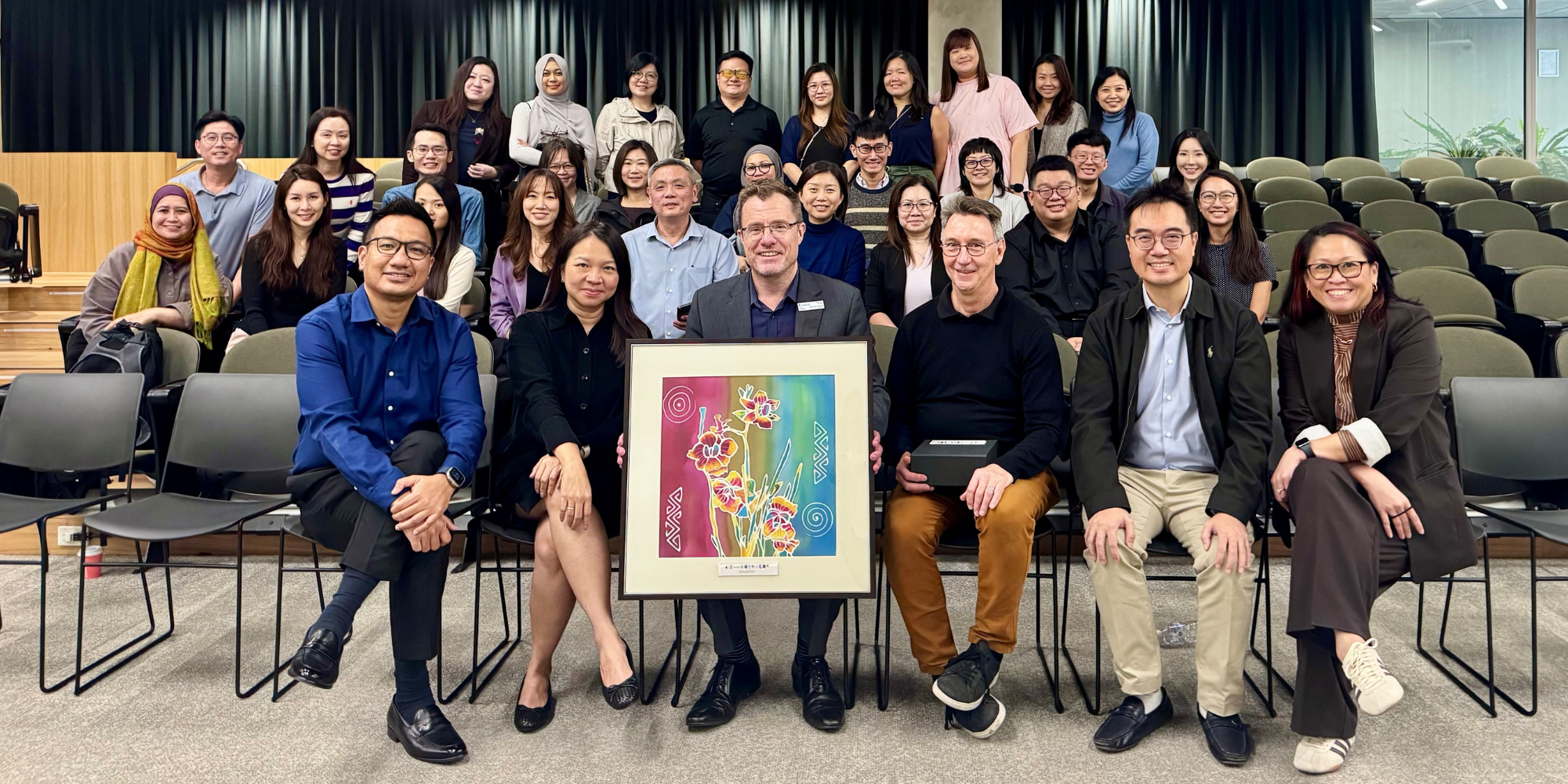
Exploring contemporary hy-flex learning environment at Centre for Higher Education Studies with Principal Stewart Milner and Architect Laurence Robinson from Brand Architects
Strengthening global partnerships in education
This initiative reflects the ongoing partnership between the University of Melbourne and Singapore’s education system, underscoring a shared commitment to advancing educational practice through research-informed professional learning.
"I’m excited to bring the rich learning from the SCALE program back to my school and lead teachers in designing innovative learning places that are intentional in achieving pedagogical encounters and developing the 21st century competencies," shared Mrs Christine Low, Principal, Boon Lay Garden Primary School.
It also highlights the growing global interest in the role of physical learning environments as a critical factor in shaping educational experiences and outcomes.
As Melbourne welcomed this cohort of international educators, the SCALE program continues to position itself as a leading platform for building capacity in the design and leadership of future-focused learning environments.
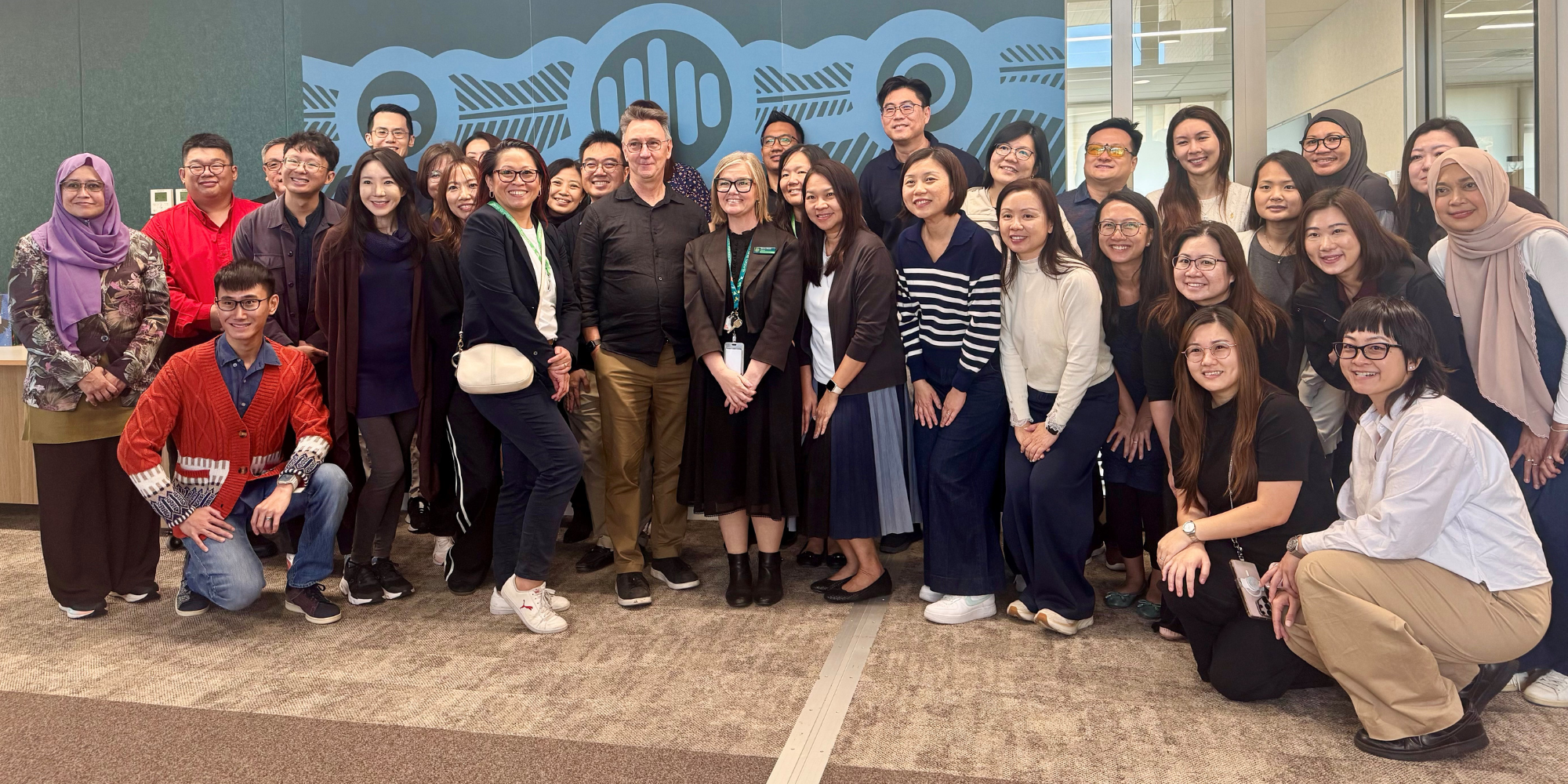
Seeing how theory translates into practice at Barayip Primary School with Principal Nicole O’Brien and Architect Laurence Robinson from Brand Architects