How an Indigenous yarning circle can deepen understanding of mental health and wellbeing
Connection, community and their importance for mental health and wellbeing took on new meaning for Master of Psychology (Educational and Developmental) students at the University of Melbourne, during an afternoon in Healesville with Murrundindi, Head of the Wurundjeri people.
Held during Mental Health Month, the annual learning experience invites students to explore Aboriginal and Torres Strait Islander understandings of health and wellbeing through storytelling, a yarning circle and the sharing of lived experience.
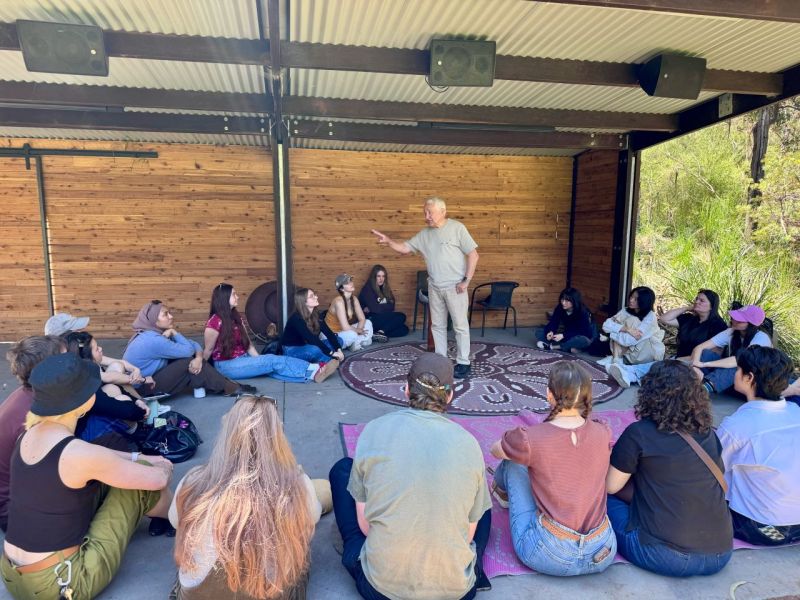 For Dr Michelle Andrews Luke, Course Coordinator of the Master of Psychology (Educational and Developmental), the opportunity offers something that cannot be replicated through academic reading: the chance to learn directly from an Aboriginal Elder and experience the power of connection firsthand.
Through the yarning circle, Murrundindi demonstrated how creating space for people to listen, speak openly and share their experiences can foster trust and strengthen relationships. Sitting in a circle, without barriers between participants, encourages people to speak from the heart, and passing a yarning stick gives each person an opportunity to contribute.
Murrundindi also spoke about the importance of not bottling up difficult feelings and of recognising the community around us as a source of support.
Working with groups signals “we’re not alone”
The visit connects directly with the course’s Working with Groups subject, in which students explore circle time and its benefits for children and young people’s wellbeing.
For Dr Andrews Luke, this is an important lesson for future educators and practitioners for working with children, young people and families.
“Hearing others share their experiences can help people recognise common challenges and find hope in the knowledge that others understand what they are going through,” says Dr Andrews Luke. “This sense of belonging can be particularly valuable for children and young people learning to express their feelings and seek support.”
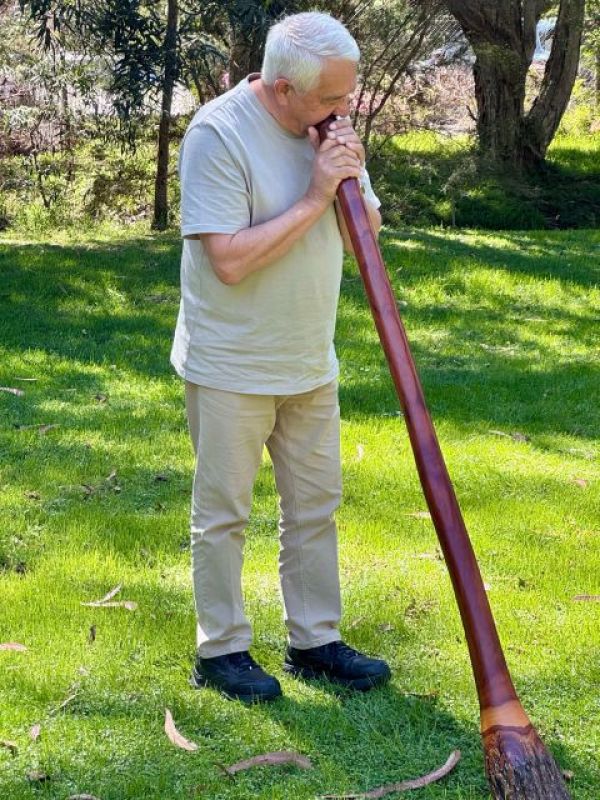
The experience also extended beyond conversation. Murrundindi played the yidaki, sharing his reflections on music, breathing and being present in the moment as part of his own approach to wellbeing and healing.
Understanding wellbeing through relationships
Dr Andrews Luke, who has worked with Murrundindi for many years in a school setting, says his approach reflects a broader understanding of connection that encompasses family, community, Country and the relationships between people and the natural world.
She believes this perspective provides important insights for psychology, particularly in contexts where some Western approaches can place greater emphasis on the individual.
“Ultimately, what I would suggest as a psychologist working with children is that, when relationships, including family and also community relationships, are strong and healthy, then children are strong and healthy.”
The same principles have relevance in classrooms, where children need to feel safe, heard and connected to their peers and teachers.
Taking the experience into practice
Dr Andrews Luke says students told her the experience had been life-changing, highlighting the difference that direct engagement can make to their understanding.
The students’ reflections reveal how deeply the afternoon resonated with them, particularly the warmth, openness and sense of trust Murrundindi brought to the group.
Master of Psychology (Educational and Developmental) student Annabel Down was moved by his willingness to share personal experiences and the compassion with which he welcomed the group.
“Hearing him share so candidly some of his hardships he has endured over his life and how he remains so optimistic was very inspiring,” she says.
For fellow student Kai Cappel, the experience demonstrated how storytelling can be so impactful, and a powerful way to create meaningful connections between people.
“I found Murrindindi's openness and warmth throughout his interactions with the group to be very inspiring, and he acted as a great example of how to connect with others,” Kai says.
Kai was particularly touched by the sense of family Murrundindi extended to the group, describing an immediate connection that he hopes to carry into his future practice.
“I strive to take this mindset and openness into my practice moving forward.”
Another student reflected on the yarning circle as a safe space to ask questions and share experiences. They were particularly moved by Murrundindi’s encouragement to future psychologists to serve their clients “from the heart”.
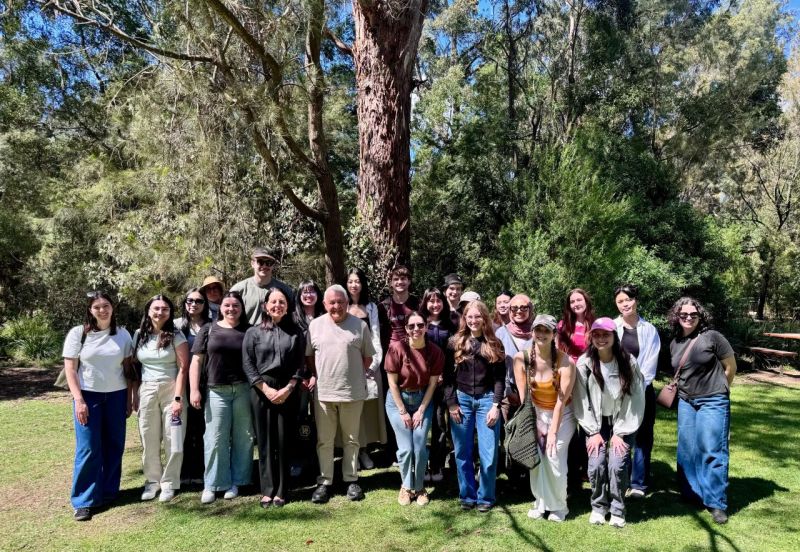
These reflections speak to the value of learning that goes beyond theory: developing the capacity to listen with compassion, build trust and recognise the experiences and relationships that shape a person’s life.
For Dr Andrews Luke, creating opportunities for students to learn directly from Aboriginal Elders and communities is an important part of preparing thoughtful, responsive practitioners.
Whether supporting a child through a difficult time, working with a family or creating a more connected classroom, future educators and psychologists can put these principles into practice.