From Melbourne to India: Applied learning toolkit bridges classrooms across continents
An international collaboration is equipping teachers with practical tools to bring real-world learning into classrooms spanning both Australia and India.
Developed in partnership with University of Melbourne’s Faculty of Education and the Australia India Institute and supported by the Australian Government Department of Education, the Applied Learning Toolkit is the culmination of a year-long project designed to help educators embed more authentic, practice-based learning into their teaching.
What is applied learning - and why it matters now
For Associate Professor Shelley Gillis from the Faculty of Education’s Youth Research Collective, the project responds to a growing global shift in how education is understood and delivered.
“At its core, applied learning is about moving beyond ‘know what’ to ‘know how’ and ‘know why,” Associate Professor Gillis explains. “It’s about designing learning and assessment that reflects real-world contexts, what students might actually encounter in workplaces and communities.”
The toolkit, launched in March, provides teachers with a comprehensive, ready-to-use resource that can be adapted across subjects and year levels.
"The tool is amazing and we are going through the entire document. I personally feel the assessment of Applied Learning to be extremely useful and trying to incorporate in our teacher's trainings.” - Special Educator, Public K-12 School, Delhi, India.
While initially intended to support both Australian and Indian schools, its strongest uptake is expected in India, where national policy is driving a stronger integration of vocational and applied learning into secondary education.
Designing learning for the real world
Despite differences between the two education systems, Associate Professor Gillis says there is significant shared ground.
“In both contexts, there’s recognition that students need more than content knowledge,” she says. “They need to be engaged, to see relevance in what they’re learning, and to develop skills they can apply beyond the classroom.”
The toolkit reflects this through a whole-system approach, structured across five key areas: learning ecosystems, curriculum design, pedagogy, assessment and partnerships.
It includes practical templates, checklists and adaptable tools, enabling teachers to implement applied learning strategies immediately.
A toolkit grounded in research but firmly focused on usability
“There’s often an assumption that applied learning sits only within vocational subjects,” Associate Professor Gillis says. “But the reality is it applies just as much to disciplines like physics, chemistry or English. It is fundamentally about how learning is designed, not simply about the content being taught.”
This aligns with broader education reform discussions in Australia, including calls for more authentic assessment and better preparation of graduate teachers to deliver applied learning across all subject areas.
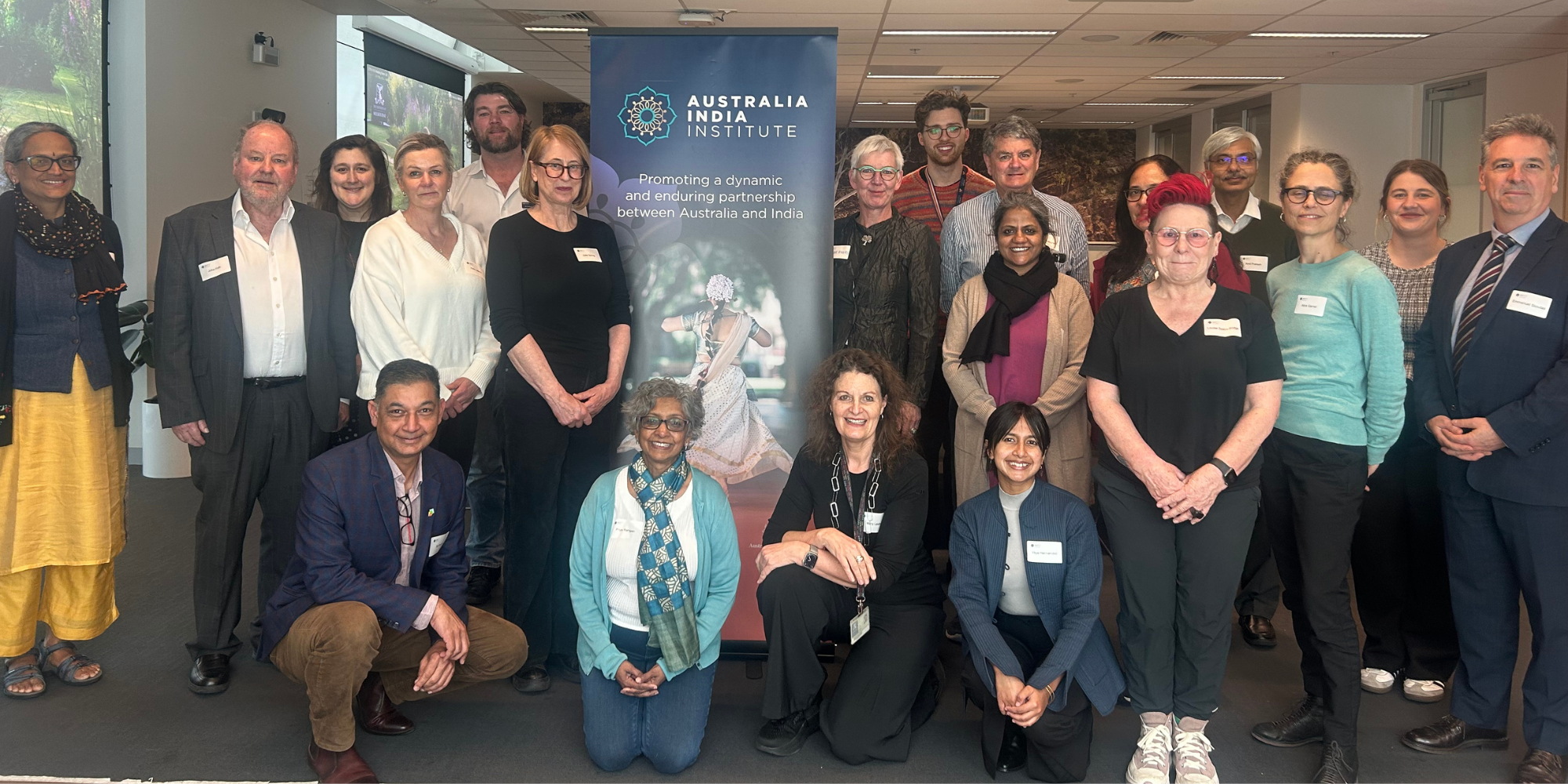
The project was developed through close collaboration between Australian and Indian partners, including Tata Institute of Social Sciences, International Institute of Information Technology Bangalore, who contributed to workshops, field visits and ongoing consultation over a 12-month period.
While some activities took place on the ground in India, the project also leveraged online engagement to ensure broad participation.
Reaching a shared understanding of “applied learning” across contexts was a critical early step.
“From the outset, the imperative was clear. The Toolkit had to be something teachers could immediately pick up, adapt and contextualise for their own students” she says. “That is where the real power lies, it is not just theoretical, but practical, flexible and responsive to local needs.”
A model for international collaboration in education
The initiative has also been recognised as a strong example of international partnership, with support from government stakeholders in both countries highlighting its value not only as an educational resource, but as a model for cross-border collaboration.
For the Faculty of Education, the project underscores the importance of global engagement in addressing shared educational challenges.
“This is about more than a toolkit,” Associate Professor Gillis says. “It’s about building connections, sharing knowledge and creating resources that have real impact in classrooms.”
As education systems continue to evolve, shaped by technological change, shifting workforce demands and increasing calls for inclusion, the Applied Learning Toolkit offers a practical pathway forward.
“By empowering teachers to design learning that is relevant, engaging and firmly grounded in real-world application, the project is reshaping what it means to prepare students, not just for exams, but for further education, work and success in life,” said Associate Professor Gillis.