Beyond the rankings: how Australians should read the PISA 2025 results
As Australia prepares for the release of the PISA 2025 results, University of Melbourne assessment expert Professor Therese Hopfenbeck says the findings should be used as a starting point for deeper questions about student learning, wellbeing and the future of education – rather than reducing complex education systems to a single ranking globally.
When the latest PISA results are released on 8 September, headlines are likely to focus on where Australia sits against other countries.
But Professor Therese Hopfenbeck, Faculty of Education’s Head of School of Learning Sciences, has a different message: look beyond the rankings.
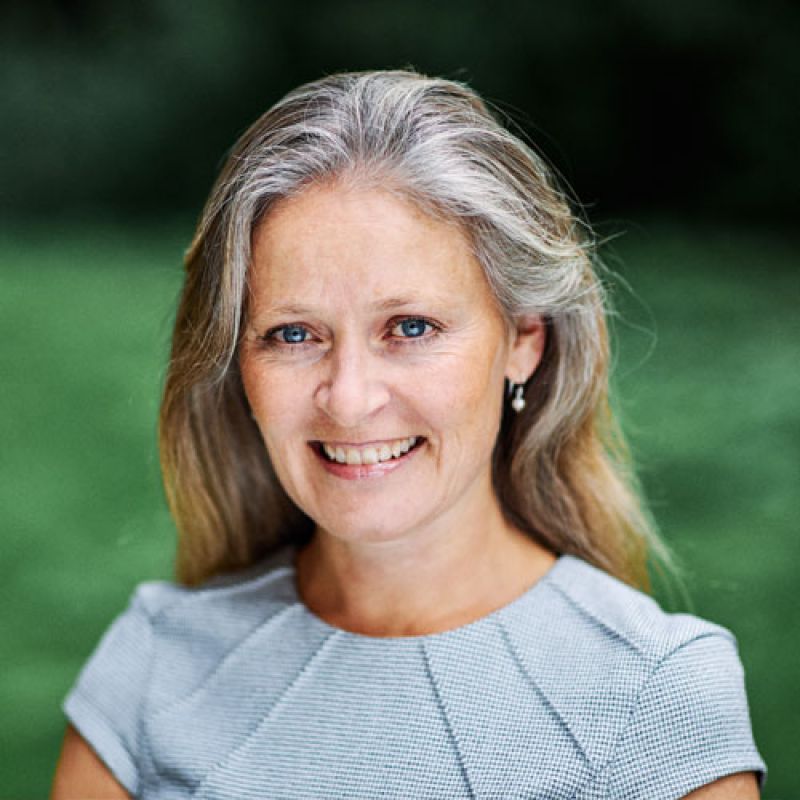 Professor Therese Hopfenbeck
“It's a very reductionist view of a big survey,” says Professor Hopfenbeck, who served as Chair of the PISA 2025 Questionnaire Expert Group (2022-2026).
PISA – the OECD’s Programme for International Student Assessment – is the world’s largest international comparative survey of 15-year-old students. More than 760,000 students across 91 countries and economies took part in PISA 2025, which assesses science, mathematics and reading, alongside students’ attitudes and approaches to learning.
Science is the major domain for the 2025 cycle, with mathematics and reading as additional domains. The assessment also introduces a new Learning in the Digital World domain, examining students’ capacity to use computational tools for knowledge-building and problem-solving.
For Professor Hopfenbeck, who has worked with PISA for more than 20 years, the real value of the data lies in the questions it can help Australia ask about its young people and education system.
“We need to interpret the data in the different context,” she says. “Every teacher should try to interpret: what does this mean for our school system?”
Look at the trends, not just the rankings
International comparisons can provide useful information, but Professor Hopfenbeck cautions against treating countries as if they are directly comparable education systems.
Different countries have different cultures, education policies, curricula and expectations around schooling. Some students may also receive significantly different levels of learning support outside school.
Instead, she argues that Australia should pay close attention to its own long-term trends – and to differences between groups of students.
“What can we learn from the trends in Australia?” she says.
That means asking whether particular groups of students are falling behind, whether achievement gaps are widening or narrowing, and what other data can tell us about why those patterns might be occurring.
For Professor Hopfenbeck, the questionnaire component of PISA is particularly valuable because it captures much more than academic achievement.
Students are asked about areas including their motivation, interests, sense of belonging, hopes for the future, approaches to learning, socioeconomic background and attitudes towards issues such as climate change.
“It’s like a little gem,” Professor Hopfenbeck says. “It’s something really, really special, which is not used.”
“If we use that data instead, we could actually have a serious discussion of what we need to do moving forward and use that to inform policy to support the next generation,” she says.
She hopes Australians will listen more closely to what students themselves are saying.
“We need to listen to students’ voices,” she says.
What does a ‘good’ school look like?
The results also provide an opportunity to reconsider what Australia means when it talks about educational success.
Professor Hopfenbeck argues that high academic performance should not be considered in isolation from students’ wellbeing, sense of belonging and capacity to become lifelong learners.
“If a good school is to support lifelong learning, have a place where people feel they belong, where wellbeing is high, where you're acknowledged, many of the Australian schools are absolutely fabulous,” she says.
This does not mean academic achievement is not important. Rather, PISA can help prompt a broader conversation about the combination of knowledge, skills, attitudes and environments young people need to thrive.
Professor Hopfenbeck says the relationship between wellbeing and achievement also needs to be interpreted in context. A country can have high-performing students experiencing significant academic pressure, while another may report higher levels of student wellbeing alongside more moderate achievement.
The question, she says, is not simply which country is “best”, but what Australia values in its education system – and what it wants schools to achieve.
Preparing students for an AI-shaped world
That question becomes even more pressing as artificial intelligence changes how young people learn and interact with information.
Professor Hopfenbeck says critical thinking and the ability to learn independently will become increasingly important as AI-generated information becomes more prevalent.
“With the increasing use of AI across society, if you do not have critical thinking skills, how are you even going to be able to read and understand what is coming from an AI author?” she says.
PISA 2025 provides an important baseline for understanding students’ experiences with digital technologies, while future PISA cycles will go further. Professor Hopfenbeck is Chair of the PISA 2029 Questionnaire Expert Group, advising on the new items for the new Media and Artificial Intelligence Literacy framework, first to be used in 2029.
For Australia, she says this means thinking beyond which devices students use and asking how they use technology, how they regulate their use of it, and whether they have the critical capabilities to navigate an increasingly complex information environment.
From results to action
Ultimately, Professor Hopfenbeck wants the PISA results to start a constructive conversation – involving policymakers, researchers, teachers and students.
Rather than immediately asking what Australia needs to “fix”, she believes Australians should first identify what is working and build from there.
“Continue doing what Australian schools are good at before you choose to focus upon something to fix,” she says.
The framing matters.
For Professor Hopfenbeck, PISA should not be used to blame teachers or schools for a single set of results. Instead, it should provide evidence that helps education communities ask better questions about what students need, and what research can tell us about how to support them.
“It’s a lot about the wording,” she says. “Is it the glass half full or half empty?”
As Australia considers the PISA 2025 results, the challenge may therefore be not simply to determine where Australian students sit internationally, but to understand what the data says about their learning, experiences and aspirations, as well as what kind of education system Australia wants to build for the future.
On 9 September, ACER and the University of Melbourne will host Beyond the Results – What PISA 2025 means for education in Australiawhere you can hear more from Professor Hopfenbeck as she features as part of the panel answering What are the barriers to better use of evidence – when we know better than ever what works to impact learning?