Associate Professor Erin Hoare awarded prestigious Churchill Fellowship and Fulbright Scholar Award
Associate Professor Erin Hoare is strengthening the University of Melbourne Faculty of Education's international research profile after receiving two of the world's most prestigious academic honours, a Churchill Fellowship and a Fulbright Scholar Award.
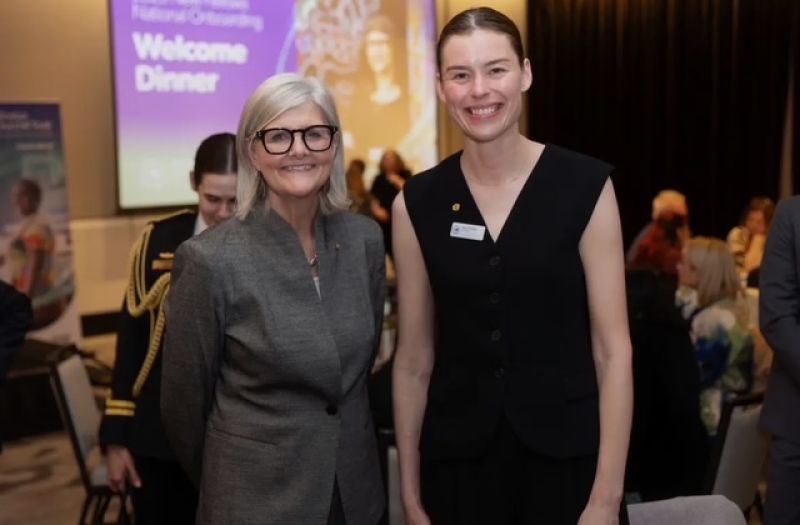
Associate Professor Erin Hoare with the Governor-General of the Commonwealth of Australia, Her Excellency the Honourable Ms Sam Mostyn AC at the Churchill Trust Award Dinner
The fellowships recognise Associate Professor Hoare's leadership in neurodiversity, mental health and public health research, and will support new international collaborations designed to advance neurodiversity-affirming and mental health practices and across education, health and elite sport.
Based within the Faculty of Education's Neurodiversity Project, Associate Professor Hoare's research examines how social systems can better support neurodivergent people throughout childhood, adolescence and adulthood, with a particular focus on improving mental health outcomes, reducing stigma and strengthening inclusion.
"My research focuses on finding novel ways to strengthen social systems and environments around neurodiversity and mental health," Associate Professor Hoare said.
"Whether that's reducing the risk of anxiety and depression, increasing social connectedness or addressing stigma, the goal is to build more inclusive and equitable communities and societies."
Originally trained in public health before qualifying as a psychologist within the Faculty’s Master of Educational Psychology program, Associate Professor Hoare's interdisciplinary expertise spans prevention and early intervention, school-based mental health, clinical psychology and community health. This breadth of experience has shaped a research program that brings together education, psychology and public health to address complex social challenges.
"My training gave me the privilege of viewing public health systems, clinical practice and what happens in schools and classrooms," she said.
"It helped me understand the ways our systems do - and don't - support people to thrive."
Advancing neurodiversity-affirming practice in elite sport
Associate Professor Hoare has recently returned from the United Kingdom as part of her Churchill Fellowship, where she examined international best practice in neurodiversity-affirming approaches within elite sport.
Established in memory of Sir Winston Churchill, the Churchill Fellowship supports Australians to investigate innovative solutions to issues of national significance by learning from leading organisations and experts around the world.
Drawing on her own experience as a former elite netballer with Melbourne Vixens and AFLW athlete with Geelong Cats, Associate Professor Hoare investigated how high-performance sporting environments can better recognise and support neurodivergent athletes while contributing to broader cultural change.
"We have a hypothesis that some aspects of high-performance sport align particularly well with neurodivergent strengths," she said.
"Characteristics such as hyperfocus, curiosity and preference for routine can be genuine assets within elite sporting environments."
Throughout the fellowship, Associate Professor Hoare met with national sporting organisations, governing bodies, academic experts and neurodivergent athletes to explore and exchange knowledge on governance, policy development and organisational approaches that embed neurodiversity across elite sport.
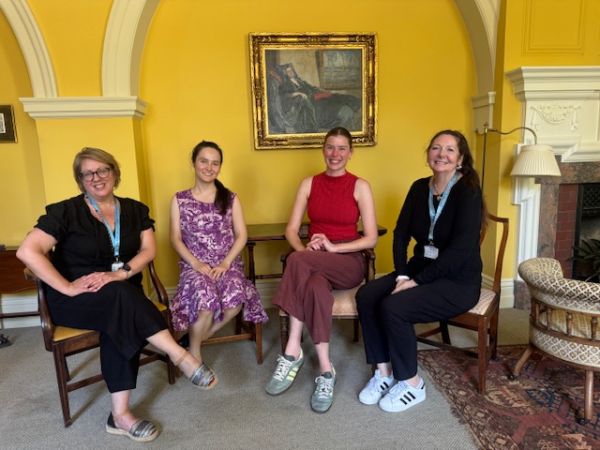 Associate Professor Erin Hoare with University of Cambridge Faculty of Education Neurodiversity team at Newnham College
An early finding from the fellowship was the importance of ensuring lived experience informs organisational leadership and decision-making.
"Sports that are recognising the importance of listening to neurodivergent athletes and embedding those perspectives within governance, policy and decision-making are leading meaningful change," she said.
"Lived experience has to be incorporated ethically, safely and meaningfully if systems are to become sustainable and genuinely inclusive."
Associate Professor Hoare believes elite sport also provides an important platform for influencing broader public attitudes towards neurodiversity.
"Elite athletes have tremendous capacity to influence public discourse," she said.
"We've seen sport play a significant role in addressing racism, sexism and homophobia. There is enormous potential for sport to contribute similarly to greater understanding and acceptance of neurodiversity."
There will be substantial insights to share later this year when the Churchill report will be published.
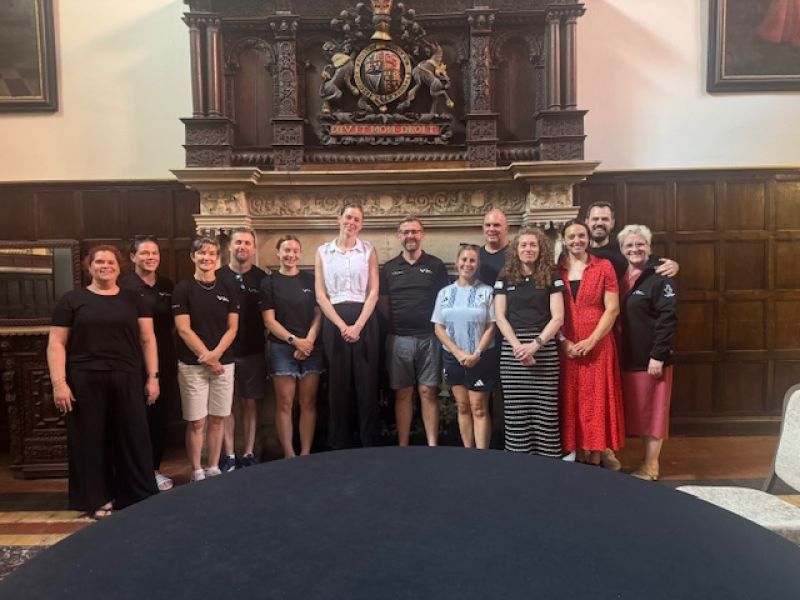
UK Sports Institute Mental Health team with Associate Professor Erin Hoare at Bisham Abbey
Strengthening international research as a Fulbright Scholar
Complementing the Churchill Fellowship, Associate Professor Hoare has also been awarded a Fulbright Scholar Award, supporting collaborative research in the United States focused on community-led approaches to addressing complex public health challenges.
Her Fulbright project will explore participatory, place-based research methods that position community knowledge as meaningful and valid alongside academic expertise when developing solutions for issues including mental health, inclusion and community wellbeing.
"The project recognises that lived experience and expertise already exists within communities and that this knowledge is essential if we are to develop effective solutions to these complex public health challenges," said Associate Professor Hoare.
This reflects growing international recognition of participatory research approaches that share power between researchers and communities, ensuring those most affected by policy and practice help shape future solutions.
Translating research into practice
Across both Fellowships, Associate Professor Hoare sees significant opportunities to strengthen the translation of research into education, health and community settings.
She believes emerging technologies, including artificial intelligence, have the potential to accelerate knowledge translation, provided they are implemented thoughtfully and equitably.
"There are enormous opportunities to partner carefully with technology to speed up knowledge translation into classrooms, healthcare and community settings," she said.
"At the same time, we need to ensure that we're not simply reproducing historical inequities by translating only existing evidence. We must continue centring the voices and priorities of the communities we hope research will benefit."
A recent example of such efforts includes the Neurodiversity Appraisal Tool, developed by Associate Professor Hoare in collaboration with a broad, multi-disciplinary research and lived experience team.
“The NeuDAT was developed in response to new national competencies that came into effect in December 2025, mandating all Australian Psychologists – more than 30,000 professionals – to hold an understanding of neurodiversity approaches.”
“We developed the tool to guide practitioners, researchers and policy-makers appraisal of neurodiversity affirming mental health research, ultimately to ensure neurodivergent perspectives and priorities remain centred.”
Associate Professor Hoare said the Faculty of Education plays a critical role in ensuring research remains responsive to educators, schools and communities.
"Our role is to listen," she said.
"We need to ensure our research responds directly to the priorities of educators and teachers, and that we work together to rapidly translate evidence into classrooms so all young people have the opportunity to thrive.”
Together, the Churchill Fellowship and Fulbright Scholar Award position Associate Professor Hoare, the Neurodiversity Project team, and the Faculty of Education at the forefront of international research advancing neurodiversity-affirming practice, mental health promotion and inclusive education.
By strengthening partnerships across Australia, the United Kingdom and the United States, the fellowships will contribute to new knowledge that informs policy, practice and community wellbeing while reinforcing the Faculty's global reputation for interdisciplinary research with real-world impact.