A university without walls: what Ukraine teaches us about resilience, wellbeing, and the future of education
What happens when a university loses its buildings but refuses to lose its purpose?
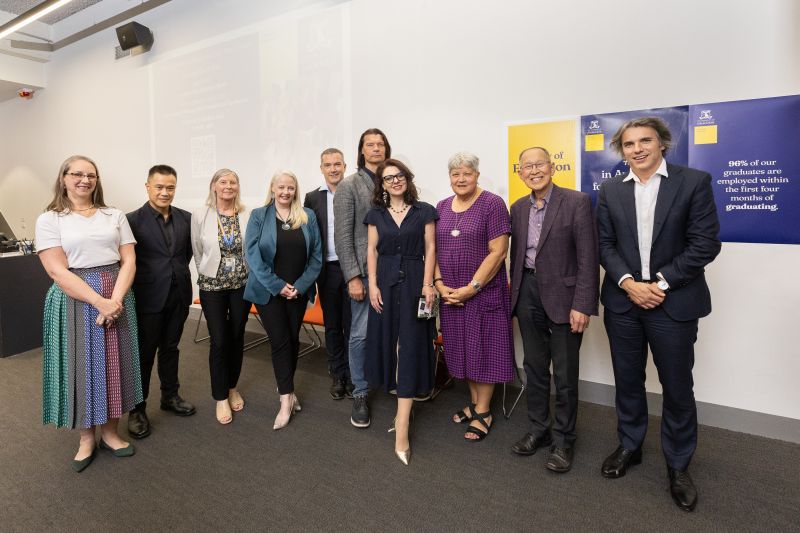
At the Faculty of Education’s University Without Walls event in collaboration with Future Campus, Ukrainian scholars Professor Yana Sychikova and Professor Igor Lyman shared their extraordinary reality of sustaining higher education during war.
Their university, displaced by occupation, now exists as a distributed, global institution, one that continues to teach, research and support its community despite ongoing uncertainty.
“A university is not its buildings. It is its people.”
This simple yet profound idea reframed the entire conversation, challenging deeply held assumptions about what defines a university.
The scale of disruption to Ukraine’s higher education sector is immense. Dozens of universities have been displaced, with staff and students scattered across regions and countries. And yet, education continues.
Through digital platforms, international partnerships and sheer determination, these institutions adapted rapidly to ensure continuity. But as the speakers made clear, resilience is not just about survival, it is about maintaining purpose and connection in the most difficult circumstances.
“We are not just continuing education; we are protecting our future.”
This framing positions education as both a stabilising force and a form of resistance, reinforcing its role in shaping society even in times of crisis.
The foundation is wellbeing
The event’s central message was the need to place wellbeing at the core of educational design. In contexts shaped by trauma and uncertainty, traditional models of teaching and learning are no longer sufficient.
Instead, universities must prioritise care by creating environments where students and staff feel supported, connected and safe, even when physical safety cannot be guaranteed.
This insight has far-reaching implications, extending beyond conflict zones to all education systems navigating disruption, whether due to pandemics, climate events, or social change.
The role of connection and global solidarity
The event highlighted the importance of international collaboration. The concept of a “university without walls” is not only about dispersion; it is about connection.
By building networks across borders, institutions share resources, knowledge, and support, strengthening their capacity to respond to crisis. For the Ukrainian scholars, these connections are not abstract; they are essential to their ongoing work.
“Solidarity is not symbolic. It is practical, and it matters.”
This perspective invites universities globally to consider their role in supporting peers facing disruption, and to rethink collaboration as a core function rather than an optional extra.
Thoughtful leadership was offered from University of Melbourne’s Faculty of Education through a facilitated conversation by Dr Rachel Colla with Associate Professor Tom Brunzell, Dr Catherine McClellan, and Professor Nikki Rickard, whose work ensured that this global conversation resonated meaningfully within the local education context in Australia.
Their contribution created a space where complex, often confronting realities could be shared with care and clarity, connecting the experiences of Ukrainian educators with the faculty’s own commitments to wellbeing and innovation.
Rethinking the future of higher education
Ultimately, University Without Walls was not just about Ukraine. It was about the future of higher education everywhere.
As universities face increasing uncertainty, the lessons shared by Sychikova and Lyman offer a compelling vision of what is possible: institutions that are adaptable, people-centred, and deeply connected.
The question for audiences is not whether such a model is relevant; but whether we are ready to embrace it.