SWISP Lab residency at Science Gallery Melbourne explores distraction, climate and digital futures
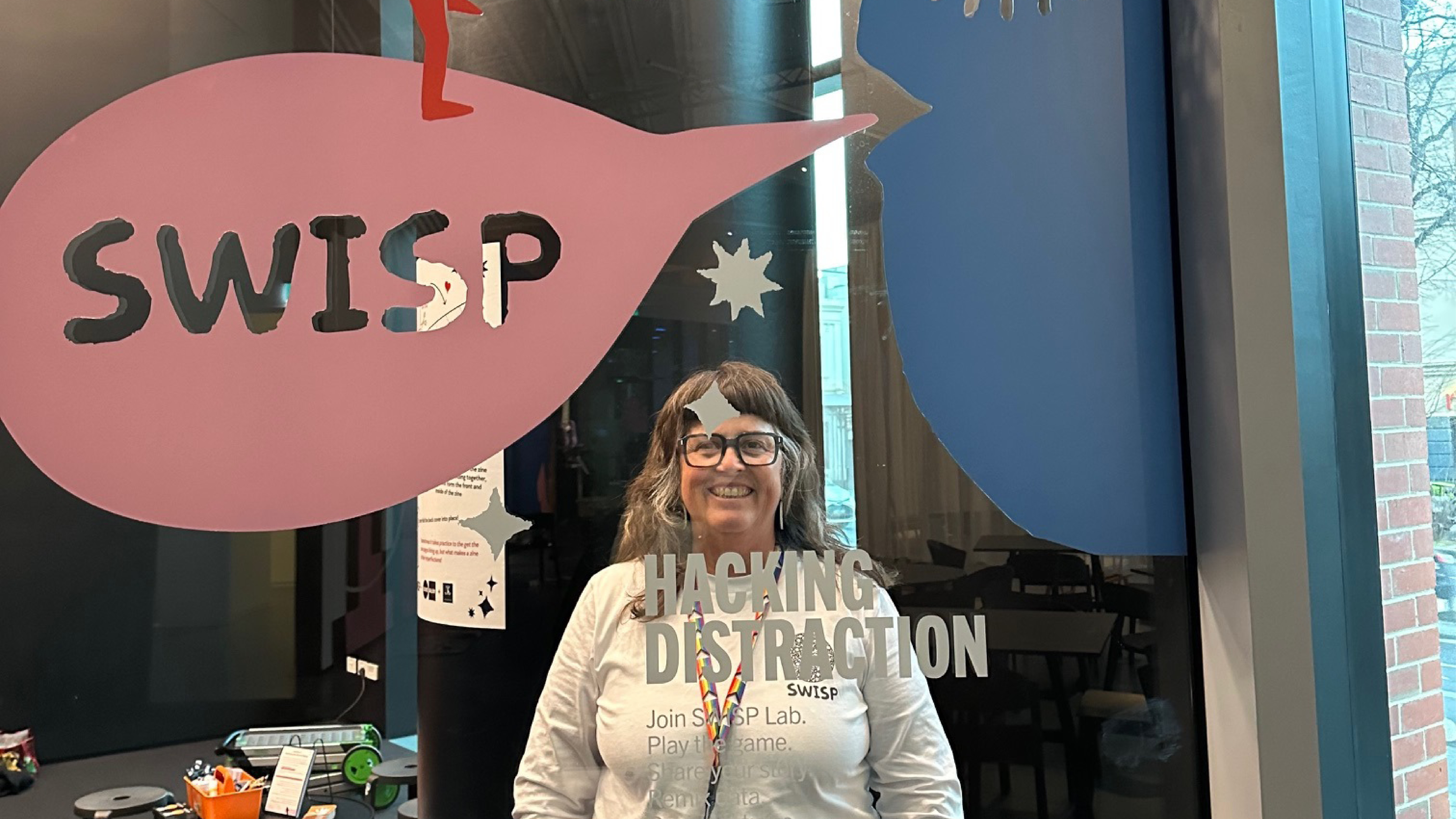
SWISP Lab from the University of Melbourne’s Faculty of Education has launched a new ‘living lab’ residency at Science Gallery Melbourne as part of the gallery’s latest exhibition, DISTRACTION.
Running season long (26 July – 2 May 2026), the Hacking Distraction residency transforms the gallery into a participatory site for speculative research, design and youth engagement, exploring the links between digital overwhelm, climate crisis and collective imagination.
Led by Associate Professor Kathryn Coleman and Dr Sarah Healy, SWISP Lab’s interdisciplinary team includes postdoctoral and doctoral researchers, artists, educators and community collaborators. Together, they are reframing distraction not as a deficit, but as a creative mode of inquiry that can spark new ways of caring for planetary and digital futures.
The residency connects to the program of the STEM Centre of Excellence High Schools Program part of the Victorian Government’s Tech School initiative. The project invites young people, educators and the public to reimagine attention, remix data and speculate on preferable, possible, and even impossible, futures.
Key features of the residency include a playable HAK.io mega game, evolving data exhibition, hackathons, wondering walks and public workshops. It will culminate in a Resonation Salon, a Distraction Response Archive, and the HAK.io Reverberation Wall, with outputs to be exhibited at COP30 in Brazil.
“This project matters because it centres young people as co-creators of climate and digital futures,” said A/Prof Kathryn Coleman, “using distraction not as a flaw to fix but as a method for noticing, resisting, and reimagining the world otherwise.”
In addition to the co-leads, SWISP Lab researchers-in-residence include Dr Angela Molloy Murphy and Angie Hostetler, with doctoral candidates Anna Farago, Cassandra Truong, Katerina Undo and Yvette Walker. Visiting scholar Filippa Kier Droob from Aarhus University will join the team from September to December.