SWISP Lab is empowering young people to reimagine the future of learning in the face of Climate Change
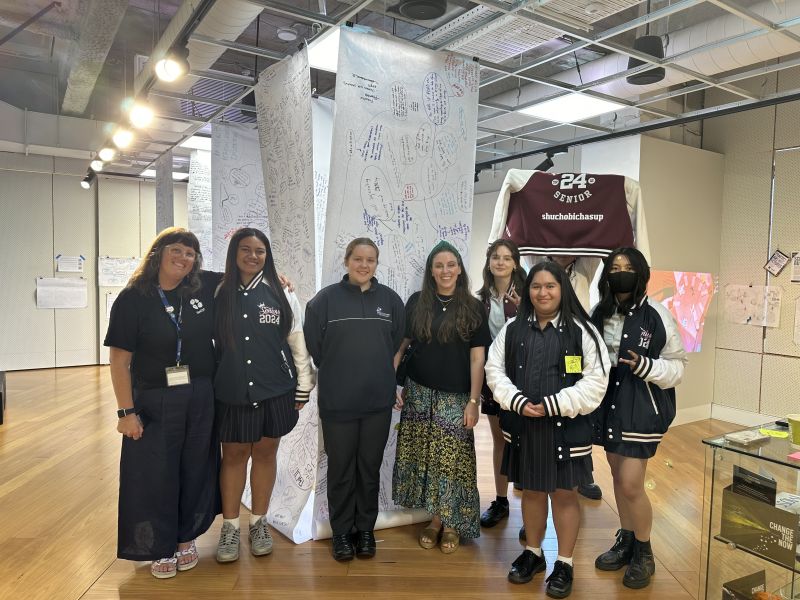
On February 27, designers, educators, young people, and researchers gathered in studioFive in the Kwong Lee Dow Building for the Future of Learning Research Exhibition and to celebrate the launch of the SWISP Lab’s ‘Speculative Co-Design Toolkit’.
SWISP (Speculative Wanderings in Space and Place) is a multidisciplinary research lab in the Faculty of Education, working in speculative inquiry, art, digital education, and social sciences.
Co-directed by Associate Professor Kate Coleman and Dr Sarah Healy, the Lab works with young people to envision reparative futures amidst climate collapse, weaving together diverse perspectives and ideas to provoke thought and exploration through digital practices, art and speculative inquiry.
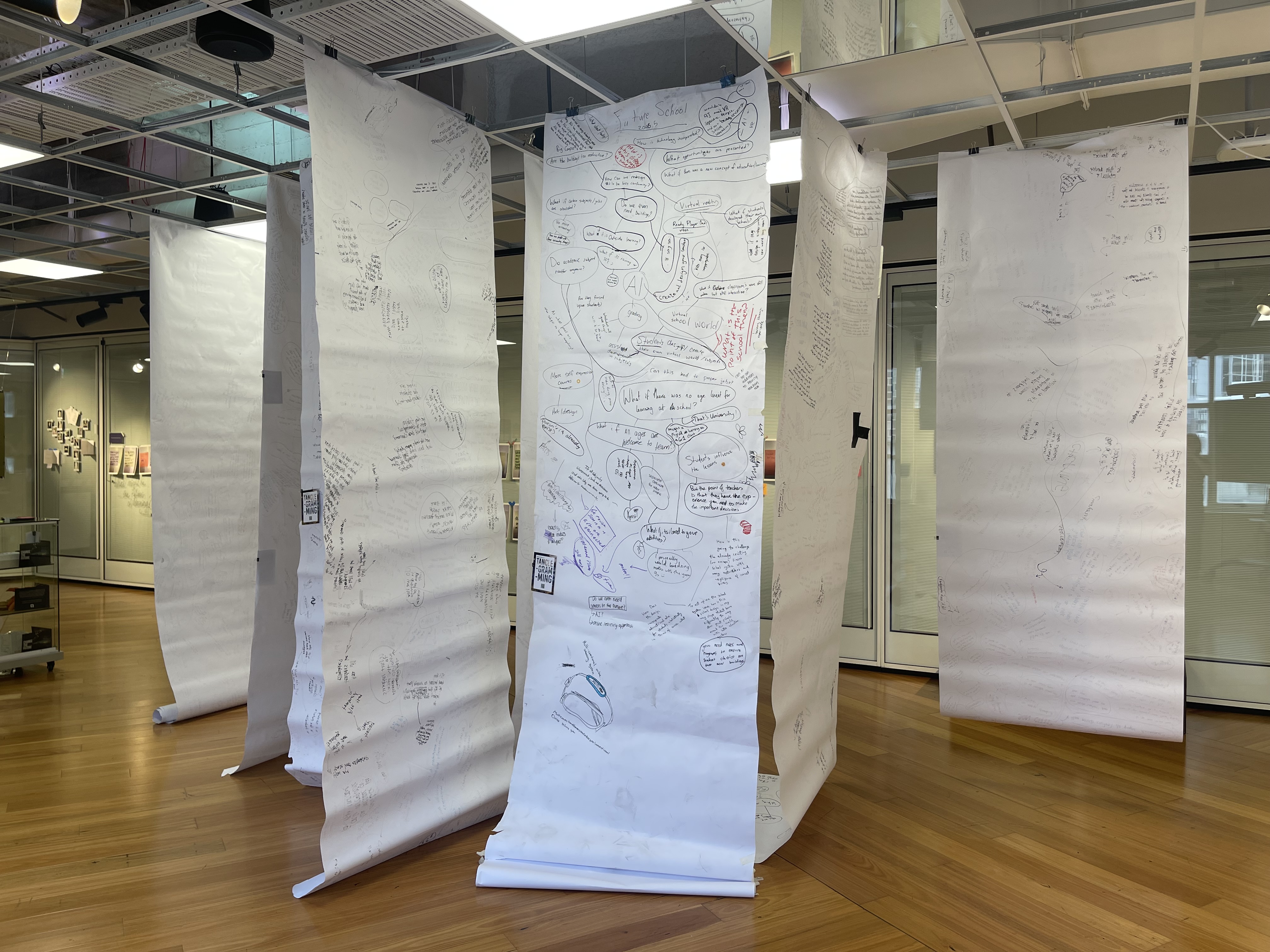
Futures of Learning 2024 Tanglegrams hung in the studiofive space in Kwong Lee Dow. Image: Supplied.
The launch of the Speculative Co-Design Toolkit and exhibition are the result of a 2 Day ‘Hackathon’, that started at Science Gallery Melbourne. SWISP’s ‘hacking’ method has been co-designed and tested with the Science Gallery Melbourne 'Sci Curious' youth steering committee, as a practice-based approach for collaborative and creative problem solving (2020).
In groups of 2-5, youth participants responded to the provocation; ‘What might be the futures of learning?’ to co-design speculative possibilities through collaborative inquiry, framed by the ‘Speculative Practice Architectures’ developed in studioFive with visual arts and design teacher candidates.
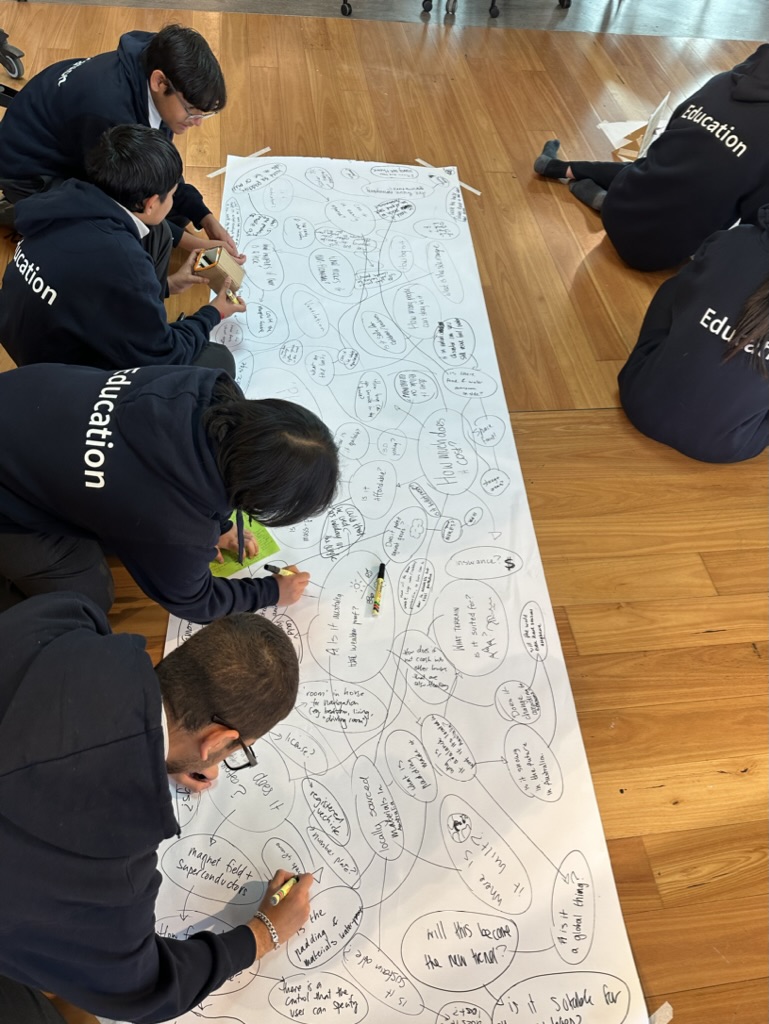
Students tanglegramming as a speculative practice during the 'Hackathon'. Image: supplied.
Vanessa Riley, Secondary Visual Arts and Design Teacher, gave enthusiastic feedback about her students partaking in the event, stating, "The workshop was fantastic! Our designers at Point Cook Senior thoroughly enjoyed their participation and had a great time celebrating at the launch party."
The exhibition included research data and artefacts such as collaborative tanglegrams, speculative practice architectures objects and storytelling provoked by SWISP lab ‘Hacking the Anthropocene’ methods.
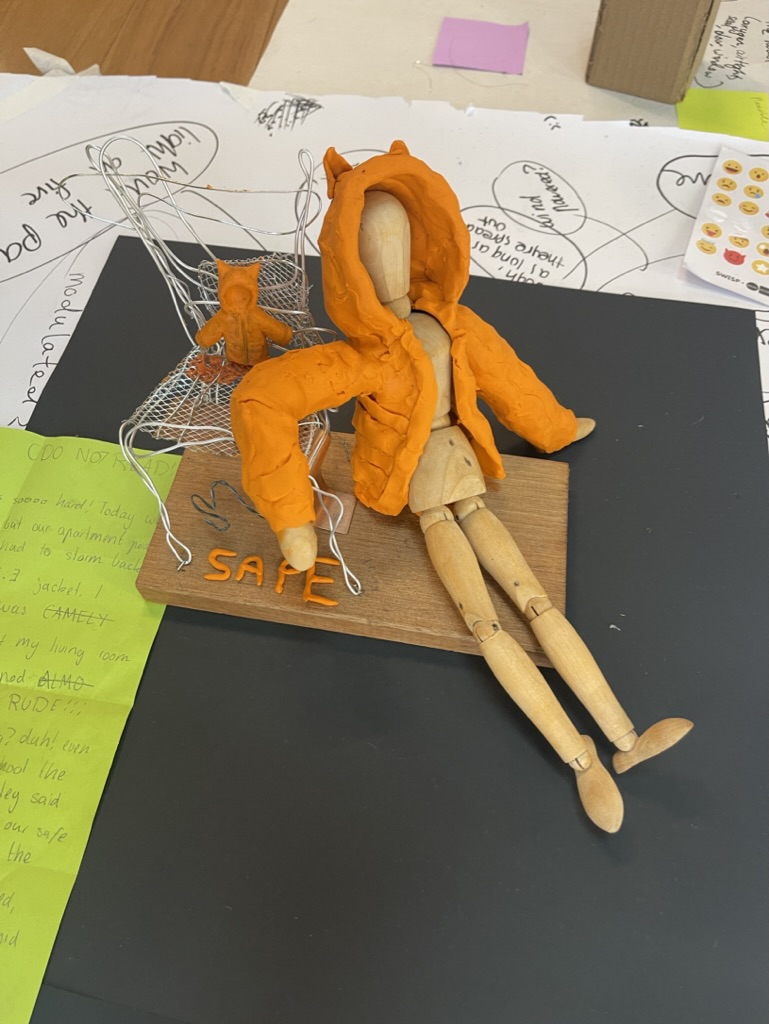
Model constructed out of clay and wire by co-designing student, addressing questions around the Future of Learning. Image: Supplied.
Part of the Futures of Learning project involved Designer-in-Residence, Jenn Thy, collaborating with SWISP Lab to create the ‘Speculative Co-Design Toolkit’. This toolkit serves as a dynamic educational resource, blending speculative design with co-design methodologies. Unlike traditional curricula, it's adaptable and encourages imaginative thinking.
The toolkit includes various elements such as a chatterbox for brainstorming "What if...?" scenarios, provocation cards, and a wondering wheel. By integrating co-design and speculative design, it guides educators towards fostering equity, justice, activism, and change in their communities.
Hosted on Padlet by the University of Melbourne, SWISP Lab invites educators to explore and engage with the toolkit, encouraging playful exploration and imagination.

Futures of Learning badges displayed on a co-designing student. Image: Supplied.
This research exhibition was a celebration of youth participation, radical codesign and was a site for taking action through the co-creation for futures yet to become.
This project is made possible through the support of Creative Futures Ltd who established the Creative Futures Design Research and Education Fund at the University of Melbourne.
You can read more about SWISP, the exhibition and the toolkit via the link.
For design educators in Victorian schools interested in using the Speculative Design Toolkit, please contact the SWISP Lab at swisp-lab@unimelb.edu.au.