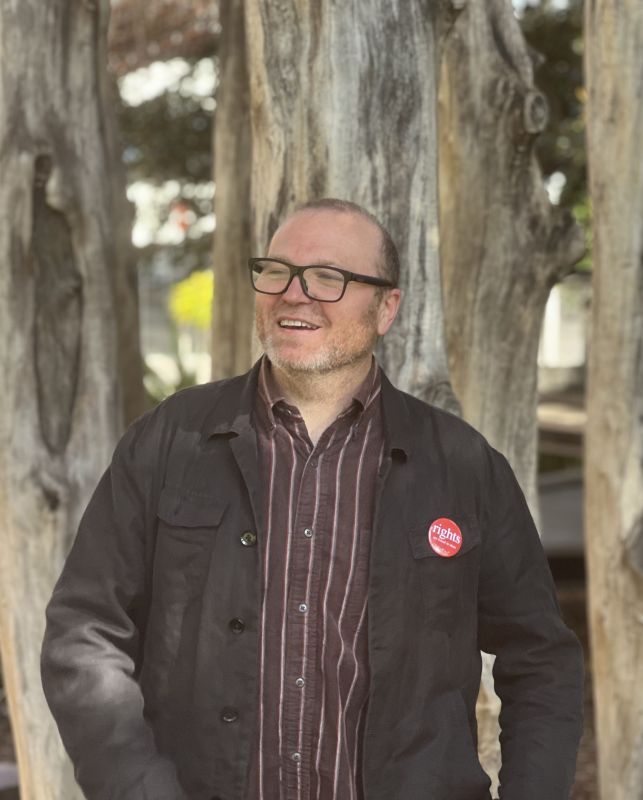
Dr Jayson Cooper is a lecturer in early childhood education. His research revolves around upskilling teachers to engage with STEM in ways that connect with Aboriginal territories and Aboriginal country.
Why did you decide to become a teacher?
I decided to become a teacher very early in my life. I was 14 when I started teaching classical piano to children and families within my local community where I grew up, in WA. Later on in life, I always fell back into teaching because it was a way that I could use my music as an income. But also, I then started realising that I really loved teaching, and that started me on my career to be a teacher.
How do you teach teaching?
I think the best way to teach teaching is through practical, hands-on, heartfelt ways. So, for instance, I'd use this park as my classroom, where the students and I will come over here and just spend time with the park, observing, noticing, and making connections from those observations back to curriculum or planning or pedagogies.
What is your favourite thing about teaching?
My favourite thing about teaching is having change in the Australian schooling system in positive relational ways, where I can build relationships with my beginning teachers in the classroom and out of it, in community settings. And for me that creates a lot of reward for the work that I do with beginning teachers and teachers in the field.
What’s your favourite thing about teaching the age group you specialise in?
One of my favourite things about teaching the age groups that I do is the diversity of people whom I work with. I'm an early childhood educator, so I work with young children from birth to age five. I also work in primary schools with teachers supporting them to advance STEM education in the early years, which includes from birth to age eight.
As a lecturer, I also work with adults: people who are becoming teachers or going through a career change. We're continuing education within early childhood, so I get a diversity of experiences and relationships that inform me as a teacher.
What qualities do you think make a really good teacher?
Three qualities that I think make a really good teacher are relational aspects where we see every child as a contributing, competent citizen of the now, of the present moment that we live in.
What surprised you about teaching?
Something that surprised me about teaching earlier on in my career was that education doesn't have to be bound by the four walls of a classroom, that it can and should live in its local communities. And I think that's been one of the greatest realisations I've had as a teacher throughout my career.
Do you have any tips for new teachers?
Some tips that I would suggest for new teachers and beginning teachers are to try things, risk things, experiment and reflect.
Is there any one moment in your career that stands out as really meaningful?
It's really hard to define one moment in my teaching career that's really meaningful for me, but one that I think has had a huge impact on myself and those that I work with has been the time I took to do my PhD, where I transitioned from working in the public schooling system into higher education. And I just was able to take a breather and spend a lot of time with the local place where I did my research, where I managed to dedicate a lot of time to creating music, which I'm very proud of.
What do you consider a classroom must-have that’s not necessarily obvious?
Something that I think every classroom should have is the experience to not be in a classroom, to go outside of the classroom, to experience the places where learning actually lives and exists.
Do you have any favourite activities to do with the children you teach?
One of my favourite activities to do with children on a nice day is to go and hang in a park, bring a few musical instruments and just hang out and experience life together.
Do you have a favourite field trip to take kids on?
Field trips are really important, and there's so many that I could recommend – Bunjilaka at the museum, into local parks or the creeks near your service, or even up here at the Science Gallery. Anywhere is a wonderful field experience and I love doing them with my students.
Do you have a funny story from teaching?
One of the funniest things that's happened to me as a teacher throughout my long career was in a middle school. I had just started as a music teacher and this child came in. He looked at me, he looked me up and down and he says, “I'm not learning music with this hippie!”
I thought that was quite funny. We ended up having a really good relationship as the term went on, but I just liked his initial statement.
Is there anything else you’d like to share about your teaching methodology and the way you approach pedagogy?
Something I’d like to share about my pedagogies is to think about publicness and how we all have a sense of publicness. And when we're teaching adults, children, whomever, that they belong to a community, they have a sense of publicness in the world. So pedagogies of publicness are really important.
How would you summarise your current research for a layperson?
Some research that I've been engaged in lately is a project called STEM Learning Ecologies with Professor Nicola Yelland and Associate Professor Jeanne Marie Iorio, where we have been working with Catholic Education SA to upskill teachers to engage with STEM in ways that connect with Aboriginal territories and Aboriginal country.
Through this research, I'm hoping to bridge the divide between Indigenous concepts of knowing and settler concepts of knowing, for them to live in relation together without appropriation over each other.