
Amy travelled to the Northern Territory for a rural teaching placement and discovered more about adapting her teaching style to student needs and the importance of cultural connection.
Teaching placements help you connect what you learn in the classroom to what you can teach in the classroom. It’s the practical component to help bridge the gap between theory and practice. It’s real experience. You’ll get practice completing and executing your lesson plans, working with students and navigating a classroom.
For many student-teachers, the best part of placement is finding connection and building a sense of community with their students. For Amy Skene, a Master of Teaching (Secondary) student, completing a placement in a rural area in the Northern Territory helped her understand the importance of incorporating cultural understanding when working with students.
Originally from the Mornington Peninsula in Victoria, Amy decided to take on a placement in Alice Springs and it highlighted how schools adapt to the local community values.
“I didn’t always plan on doing a rural placement, but after doing some placements in Mornington and throughout Victoria, I wanted to explore ways I could improve my teaching practice and work to decolonise the education system. I found coming up to the Northern Territory has really helped me find a way forward to improve as a teacher and made me more open to new opportunities.”
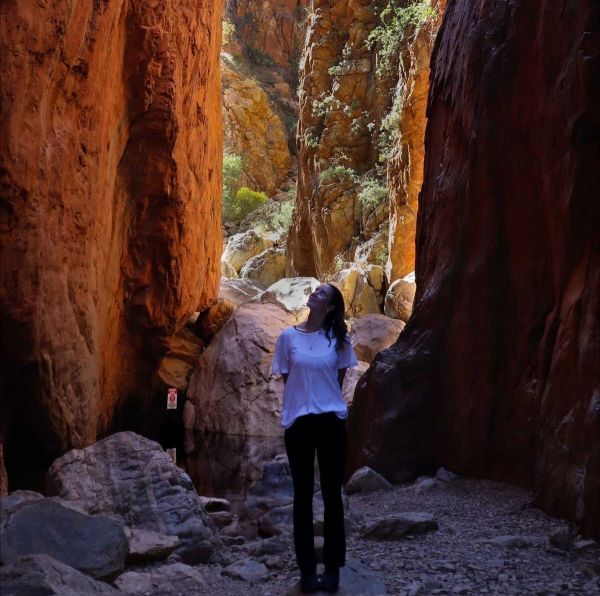
There's a strong school community in Alice Springs, with relationship-based teaching and trauma-informed learning. It encouraged me to create a connection with students and my placement has made me more prepared to teach.
Amy Skene, Master of Teaching (Secondary) student
A rural placement can feel like an exciting but challenging experience, and it’s not something all students plan for when they imagine their teaching degree. But learning how to adapt your teaching style and skills to the needs of a classroom is what can help you become a teacher who is responsive to the students' needs, can adapt to new technology or new data as it’s available and teach in a way that resonates with your students.
In a rural or regional placement, you’ll often find smaller class sizes and you might get opportunities for more personalised attention with each student. You can also teach a range of subjects and age groups and might get opportunities you wouldn’t have otherwise in a busy metro-area school, helping you become a more versatile educator.
“One of my favourite experiences on placement was on school camp when some Indigenous students wanted to cook some kangaroo tails for the group and to share their culture. The teachers made time to get the ingredients and help the students share their knowledge in a way that shows teaching is about being adaptable and flexible. This was such a powerful learning experience for everyone and having teachers that were willing to facilitate that kind of opportunity was awesome.”
When Amy first came to the Northern Territory, she didn’t have much experience working within an Aboriginal community – many students from metro cities don’t. This is another reason why a regional or rural placement can help you see the potential opportunities within teaching as part of a degree that can take you almost anywhere.
For many students starting placement, there’ll be a lot of new experiences, including learning how to manage a classroom when you might have students with different interests and different levels of engagement. For Amy, she recounts how learning from her mentor teacher demonstrated the importance of being adaptable in any given situation.
“There was one moment when the students weren’t willing to engage, so to help get the students involved in their learning, the teacher got a student to sit in a spinning chair and as they were spinning around, the teacher was verbally instructing them (and the class) to think about the physics laws involved in this kind of movement. Rather than stressing about the student using the chair as a distraction, it became a tool and part of the lesson, which I thought was quite special and unique. The teacher adapted really well, and that’s something I want to take on board for my own teaching practice."


Learn more
Master of Teaching (Secondary) Explore all our courses