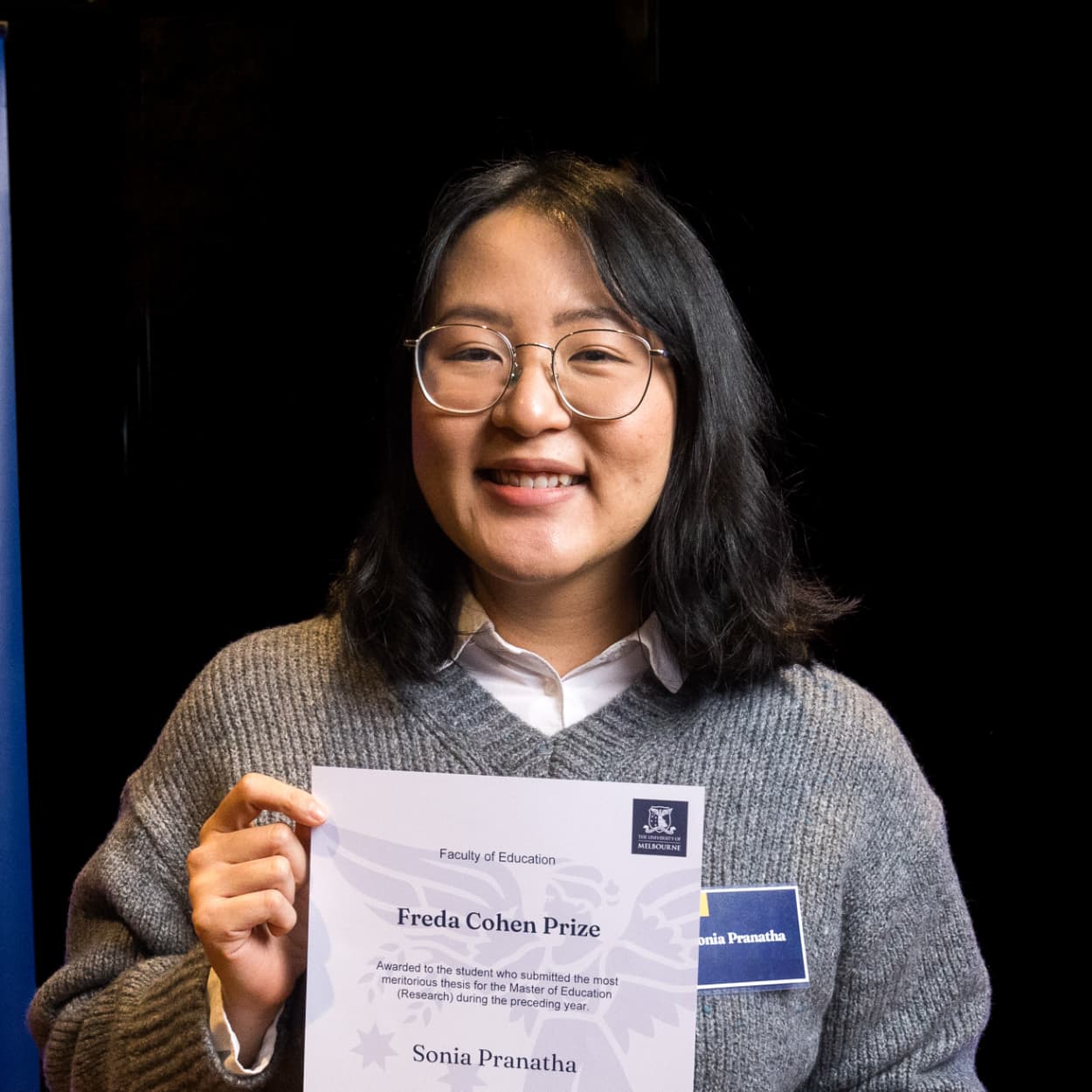
After completing her Master of Teaching (Early Childhood), Sonia was inspired to go on to do a Master of Education (Research). Her thesis explored the experiences of immigrant teachers from non-English-speaking backgrounds working in the early childhood sector.
I was interested in graduate research study at the Faculty of Education (FoE) because it is the place where I began my journey in early childhood education. I did my Master of Teaching (Early Childhood) at FoE, and learnt so much during my time here.
Why were you interested in graduate research study at FoE?
I was interested in graduate research study at Faculty of Education (FoE) because it is the place where I began my journey in early childhood education. I did my Master of Teaching (Early Childhood) at FoE, and learnt so much during my time here. It was also during this time that I found my interest in doing research. The time that I spent at FoE had pushed me to broaden my understandings and perspectives on the issues that exist in the early childhood education field.
What was your thesis topic? What did you find?
My masters research thesis investigated the positioning of non-Anglo immigrant early childhood teachers in Victorian early childhood education workforce policies. My thesis problematised the policy constructions that continue to marginalise and sideline these teachers despite the recent push from the Australian government to bring in and incentivise immigrant teachers to enter the workforce.
The findings of my thesis are significant, because it calls for attention to consider how policymakers can attend to this growing demography of teachers. With more teachers coming from overseas, there needs to be greater consideration on how we can support them to adjust and transition to Australia's early childhood education sector.
Why was this topic of interest to you?
I’m particularly interested in this topic because of the stories and experiences I have heard from colleagues and peers, who were early childhood teachers with immigrant backgrounds. Despite their genuine love and passion for teaching young children, they often shared their struggles and burdens of navigating complex issues that were attributable to their immigrant status. Complex immigration processes, strict visa regulations, devaluation of their overseas qualifications and experiences, these were just the tip of the iceberg. They also had to navigate through adjusting into a new country with new set of cultures and values that may be in tension with their own cultures and values.
The stories and experiences led me to think about how these teachers are being supported. There have been many pushes to incentivise immigrant teachers to work in Australian early childhood education, as an attempt to fill the workforce shortage. Yet, when it comes to this demography, not much is known. There is a dearth of research in this particular topic, and their presence in national and state policies remain under-represented. All of these led to my decision to explore this topic for my thesis.
Being a graduate researcher can often feel like you are a lone ranger. But it is not. The people you meet in your research groups, your supervisors, your friends, they are all there to support you. So be a part of a community that can really nurture you and support you to grow.
How has this topic changed your view of education?
This topic has really broadened my view about ‘education’. Previously, when I thought about the word ‘education’, the first thing that came to my mind would be the students or the children. Thinking about doing educational research, I would often assume that students would be the primary focus of it.
However, my view changed so much after undertaking my research. I realised that education cannot happen without the teachers. If we want to improve or transform education systems, it doesn’t start with the students, but it should start from the teachers. Yet at the same time, I realised how often teachers are sidelined when we talk about education. And so, throughout my study, I have learnt to grow more appreciation for the work that teachers do, and it really solidified my research interests to focus more on the teachers.
What are your plans having undertaken this research and how will this build on your thesis?
Since the completion of my masters degree, I have started undertaking a PhD degree here at the FoE. I believe that it is an important topic that remains overlooked and under-researched, despite the continuing push to import overseas teachers to come and work in the sector.
My goal is to continue my journey within this field of research, to give a platform for immigrant teachers to share their lived experiences and contribute to the betterment of the sector. Given the important roles that these teachers have for the sector, I believe that it is imminent for more research to be done with this group of teachers. By listening to their experiences, it is possible to consider the ways the workforce can be improved.
What key piece of advice would you give to a new graduate researcher in FoE?
I think the key advice I would give is for all new graduate researchers to enjoy the process. The journey of being a graduate researcher can often be challenging and difficult, especially at the start, when you are not sure what you want to do, or if you are doing the right thing. At least, that was how it was for me. But persevere in that process, and you will grow naturally. The knowledge, skills, and experiences will grow as long as you continue to move forward. So don’t give up!
I also think having a community is also very helpful. Being a graduate researcher can often feel like you are a lone ranger. But it is not. The people you meet in your research groups, your supervisors, your friends, they are all there to support you. So be a part of a community that can really nurture you and support you to grow.
Learn more
Master of Education (Research) Explore all our courses