Faculty of Education staff, students and community are encouraged to actively engage with and contribute to the Faculty’s sustainability initiatives, helping to drive meaningful change at the University of Melbourne.
Our approach to sustainability
In alignment with the University of Melbourne’s Sustainability Plan and the Faculty of Education Sustainability Action Plan, we aim to integrate sustainability across the pillars of people and culture; students; learning and teaching; research; community engagement and operations.
Sustainability Report
The Sustainability Report outlines the sustainability achievements and developments of the Faculty of Education at the University of Melbourne from 1 July 2023 until 30 June 2025. It captures the progress of the initiatives of the FoE Sustainability Portfolio, including the FoE Sustainability Action Plan 2024-2026.

Sustainability Action Plan
The Faculty of Education Sustainability Action Plan outlines actions the Faculty has committed to in order to further sustainability, including in relation to climate change and biodiversity loss.
Sustainability Scan
The research undertaken for the Faculty of Education’s Sustainability Scan informed the development of the Sustainability Action Plan. The Scan identified existing sustainability initiatives that were already underway within the Faculty. It also highlighted gaps and made recommendations for actions to enable a more comprehensive and in-depth approach to sustainability across the Faculty.

Our sustainability initiatives
Download our guides containing actionable strategies for the Faculty of Education to embed sustainability in our learning and teaching and research.

Our sustainability projects
-
MECCE Project
The Monitoring and Evaluating Climate Communication and Education (MECCE) Project aims to increase the quality and quantity of climate communication and education to advance global climate literacy and action. With a team of over 100 researchers, organisations, and UN agencies, the project has developed 14 global indicators, 20 case studies, and 80 country profiles.
-
SWISP Lab
SWISP (Speculative Wanderings in Space and Place) Lab is an interdisciplinary critical futures living lab and speculative thinking consultancy. It seeks to speculate about reparative futures in the midst of climate collapse. Researchers entangle their research pathways in this collective to pose questions, break, disrupt and wander with/in multigenerational connected communities.
-
Reading Climate
Indigenous writers’ contributions to understandings of climate are well documented, and the power of story to impact on understandings of significant environmental issues is well established, however, Indigenous writing remains significantly underrepresented in Australia’s secondary school and tertiary curricula. The Reading Climate project brings into dialogue Indigenous authors, interdisciplinary scholars, English teachers and students through book clubs and public events.
-
Promoting Education for Sustainable Development
This website, created by a team of educators, alumni and students from the Faculty of Education, aims to provide schools and educators in island schools with access to teaching resources that are easy to use and that can support the greater understanding of sustainable practices within their local context. These resources include school kitchen gardens, stories about sustainability, whole school approaches, and general teaching resources.
-
Sustainability Brigade
The FoE Sustainability Brigade is a new initiative in 2025 that brings together Education students and Graduate Researchers who are passionate about sustainability. It provides a platform to connect with sustainability experts both within and outside the Faculty through various events, such as seminars, webinars, and social gatherings.
-
'Tricky Recyclables' Collections
Be a change maker and support sustainability by participating in the Faculty’s new ‘Tricky Recyclables’ program for soft plastics, e-waste, textiles, and batteries. By participating you can help reduce waste and contribute to a more sustainable environment within the Faculty and beyond. Your ‘tricky recyclables’ can be dropped at the collection point on the Ground Floor of the Kwong Lee Dow Building [A white two drawer cabinet on the carpeted area].
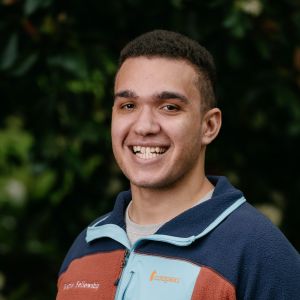
Wattle Fellow
Caleb Pollard is currently undertaking a Masters of Education (Research) examining factors that influence literacy and numeracy scores or Urban and Rural Schools in the Solomon Islands. He is also a Gold Medal recipient in Geography by the University of the South Pacific.
University of Melbourne initiatives
Green Impact
Get involved in Green Impact, the University’s initiative to promote sustainable practices, reduce environmental footprints, and create a greener campus through activities and challenges that support sustainability efforts across the University.
Wattle Fellowship
Grow your leadership in global sustainability with the Wattle Fellowship, a year-long program that empowers students through retreats, workshops, mentoring, and the opportunity to lead their own sustainability project.
The Wattle Fellowship is the University’s co-curricular program designed to develop student leadership in global sustainability.